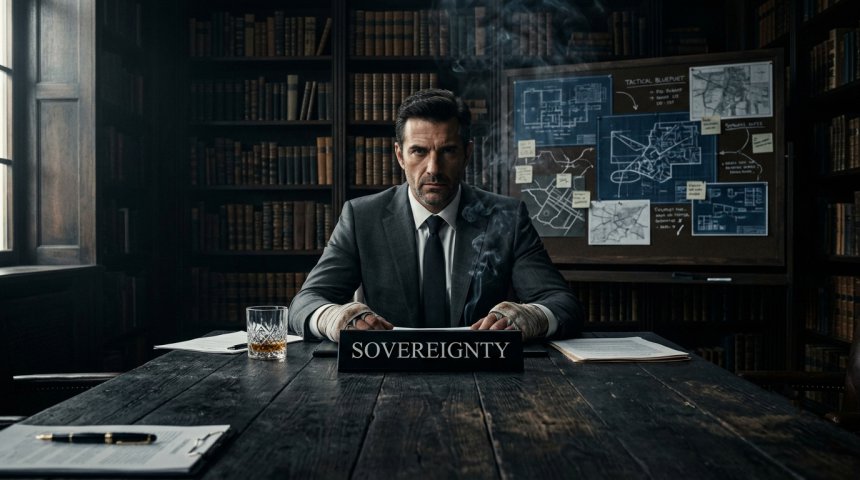
The Role of Fathers in Preventing Weakness in Boys
A father's brutal honesty is the antidote to a crisis of weakness in boys. This is not gentle advice; it's a 7-step battle plan for forging resilient, capable men. Stop the fragility. Start the mission.

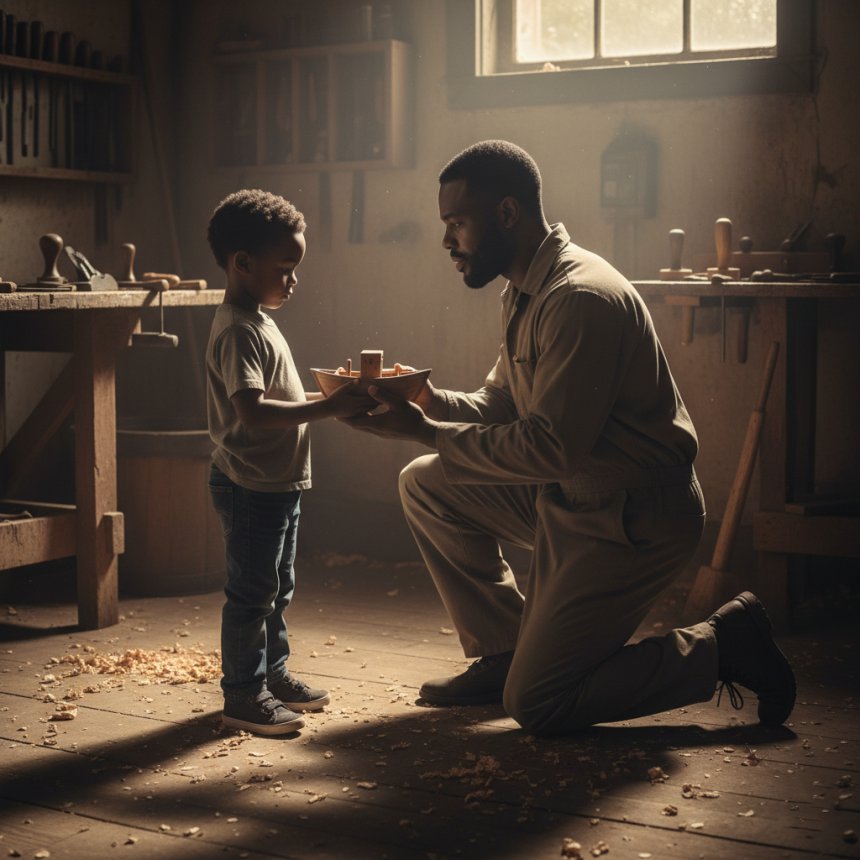
The Unspoken Epidemic: A Father's Brutally Honest Guide to Forging Resilient Sons
We are witnessing a silent crisis of weakness in our boys, and it is a crisis fathers are uniquely positioned to solve.
This isn't about bench presses or calloused hands. This is a weakness of character, a fragility of spirit that manifests as anxiety, a crippling fear of failure, an inability to regulate emotion, and a soul-crushing dependence on external validation. The world is actively feminizing boyhood—stripping it of its necessary struggles, its healthy aggression, and its demand for competence—and then pathologizing the resulting dysfunction. As a father, you are not just a parent; you are the primary antidote.
Your son doesn't need another friend, a passive bystander, or a cheerleader who applauds mediocrity. He needs a father—a mentor, a champion, and an immovable rock who loves him enough to demand more from him. This is your sacred, non-negotiable duty. What follows is not a gentle parenting tip sheet. It is a battle plan for building a son who is resilient, capable, and morally grounded.
Redefining "Weakness": It's Not What You Think
Before we can build strength, we must correctly diagnose the weakness. Modern weakness in boys is rarely laziness; it's a deficit of inner resources.
The Four Pillars of Modern Weakness:
1. Emotional Fragility: The inability to process negative emotions like disappointment, anger, and shame. This looks like meltdowns over minor setbacks, sulking, and a victim mentality that blames others for his feelings.
2. Lack of Agency: The belief that he is not the primary actor in his own life. He waits to be rescued, expects solutions to be provided, and lacks the core belief that his actions dictate his outcomes.
3. Poor Impulse Control: An inability to delay gratification. This manifests as screen addiction, poor dietary habits, and a refusal to engage in boring-but-necessary tasks (like homework or chores).
4. Absence of Purpose: A life lived passively, directed by algorithms and peer approval, rather than being driven by internal values, missions, and a sense of responsibility to something greater than himself.
A weak boy becomes a fragile man. And fragile men break under the pressures of career, relationships, and fatherhood itself. They abandon their families, succumb to addiction, and live lives of quiet desperation. The stakes of your inaction could not be higher.
The Indispensable Father: Why a Mother's Love Is Not Enough
A mother’s love is unconditional, nurturing, and safe. It is the foundation of a child's sense of worth. It is essential. But it is not sufficient for building a man.
A father’s love is often conditional upon performance and behavior. This is not a dirty secret; it is the engine of growth. You, as the father, represent the bridge from the safe container of the home to the competitive, often harsh, demands of the external world. You are the one who teaches him that the world does not care about his feelings—it cares about what he can do.
From a developmental psychology and evolutionary biology standpoint, boys are hardwired to look to their fathers to learn how to be. You are the model for:
· How to handle adversity: Does he see you complain and quit, or analyze and persevere?
· How to treat women: You are his living example of how a man respects, protects, and honors his partner.
· How to manage conflict: Does he see you use aggression or assertive, calibrated strength?
· How to carry responsibility: He learns from watching you provide, protect, and lead your family.
Your absence—physical or, just as damaging, emotional—creates a void. And that void will be filled by the weakest influences our culture has to offer: influencers promoting degeneracy, video games offering false accomplishments, and a pornographic landscape that warps his understanding of intimacy and women.
The Father's Framework: 7 Brutal Actions to Forge Strength
This is the core of your mission. Implement these not as a checklist, but as a new way of being with your son.
1. Embody Unshakeable Frame and Emotional Mastery
The Brutal Truth: Your son’s emotional state will be a reflection of your own. If you are reactive, anxious, and volatile, you are teaching him that men are slaves to their emotions.
Your Action Plan:
· Master Your Tempers: Never yell. When frustrated, lower your voice and slow your speech. Your calm in the storm is his anchor. It teaches him that a real man’s power is under control.
· Reframe Setbacks: When he fails or gets hurt, your first words should not be coddling. They should be, "Okay. What did you learn?" or "What's the next move?" You are teaching him that failure is not a verdict; it is data.
· Take Radical Responsibility: Verbally model this. Say things like, "I messed that up, and here’s how I’m going to fix it." He must see you hold yourself accountable before you ever hold him accountable.
2. Enforce the Discipline of Hard Things
The Brutal Truth: Modern life is engineered for comfort. Strength is built through voluntary discomfort. You must be the source of that productive struggle.
Your Action Plan:
· Mandatory Chores & Projects: Not just making his bed. I'm talking about splitting wood, washing the car by hand, mowing the lawn, building a fence, fixing a leaky faucet. These tasks are physical, measurable, and have a clear beginning and end. They teach competence and the deep satisfaction of tangible work.
· The "No-Quit" Clause: When he joins a team or starts a project (like learning an instrument), he sees it through to the end of the season/term. No excuses. You are teaching him that commitment is more important than fleeting motivation.
· Embrace Boredom: Actively create spaces of time with no screens. Let him be bored. Boredom is the cradle of creativity and self-reflection. Do not rescue him from it.
3. Be the Arbiter of Reality, Not a Source of False Praise
The Brutal Truth: Telling your son "You're so smart!" or "You're the best!" after a mediocre performance is psychological poison. It teaches him to seek the approval of the judge rather than the satisfaction of genuine achievement.
Your Action Plan:
· Praise EFFORT, not Identity: Instead of "You're a genius," say "I saw how hard you studied for that math test. Your focus was impressive." This links success to actions he can control.
· Give Honest, Constructive Feedback: If his performance in a game was poor, say, "Your effort was good in the second half, but your defensive positioning in the first half was lazy. Let's work on that this week." He needs to trust you to tell him the truth, even when it hurts.
· Celebrate GRIT: The highest compliment you can pay your son is, "You are resilient. Nothing seems to keep you down." This defines his identity around perseverance.
4. Teach Aggression as a Tool, Not a Temper
The Brutal Truth: Society tells boys their natural aggression is toxic. This is a lie. Aggression is a neutral force—like fire. Uncontrolled, it burns down houses. Controlled, it forges steel and heats homes. Your job is to teach him to control his fire.
Your Action Plan:
· Martial Arts or Competitive Sports: Enroll him in a discipline like Brazilian Jiu-Jitsu, wrestling, or boxing. A good coach will teach him that his strength is a responsibility to be used with restraint and precision. He will learn to harness his aggression in a controlled environment and to face adversity head-on.
· Teach Assertive Communication: Role-play how to stand up for himself verbally without throwing a punch. "I don't like it when you say that. Stop." Teach him to use a firm tone and direct eye contact.
· Define the Mission of Protection: Teach him that his physical strength has a sacred purpose: to protect those who are weaker. His little sister, a kid being bullied, his mother. This gives his aggression a moral framework.
5. Initiate Him into Manhood Through "Rites of Passage"
The Brutal Truth: Boys don't become men through age. They become men through tested and proven competence. You must create these tests.
Your Action Plan:
· The "First Knife" Ritual: At a certain age (e.g., 10-12), give him his first quality pocket knife. With it, teach him the profound responsibility of carrying a tool that can cause harm. Teach him to whittle, to sharpen it, to care for it. This is a symbolic transfer of trust and capability.
· The "First Solo Task": Send him on a multi-stop errand alone (e.g., go into the hardware store, find an item, and pay for it). Then, a solo bus ride. Then, a overnight camping trip in the backyard. Gradually expand the circle of his demonstrated competence.
· The "Manhood Talk": This isn't just "the sex talk." It's a series of conversations about honor, integrity, what it means to be a good man, how to treat a woman, and the realities of male responsibility. This is you, consciously passing down the code.
6. Curate a Healthy Digital Diet
The Brutal Truth: You are not "monitoring" his screen time; you are the curator of his mind. The digital world is a psychological war for your son's attention, values, and dopamine system. You are losing this war by default.
Your Action Plan:
· No Smartphones Until High School: Give him a dumb phone for communication. A smartphone is a pocket-sized portal to addiction and degeneracy for a developing brain.
· Computers in Public Spaces Only: No gaming consoles, laptops, or tablets in the bedroom. The digital world is a public utility, not a private sanctuary.
· Audit and Discuss His Consumption: Regularly look at his YouTube history, the games he plays, the influencers he follows. Discuss the values (or lack thereof) being promoted. "Why do you think this guy is popular? What is he really selling?"
7. Forge an Unbreakable Connection Through Shared Mission
The Brutal Truth: All this discipline is worthless if it's not built on a foundation of deep, unwavering connection. He must know, in his bones, that you are on his side.
Your Action Plan:
· The Weekly "Shoulder-to-Shoulder" Time: Don't just talk at him. Do things with him. Work on the car, go fishing, build a model, train for a 5k together. Men and boys often connect best when working alongside each other on a shared task. The most important conversations will happen here, organically.
· Listen to Understand, Not to Respond: When he talks, put your phone down. Make eye contact. Ask follow-up questions. Let there be silences. Create a space where he feels safe to express doubt and fear, knowing you won't ridicule him or immediately try to "fix" it.
· Express Pride and Love Verbally and Physically: He needs to hear it. "I'm proud of the man you're becoming." "I love you." Combine this with the firm handshake, the hug, the pat on the back. He needs both the words and the physical affirmation of your bond.
The Legacy of a Father Who Steps Up
This path is not easy. You will be tired. You will be tempted to take the easy route, to hand him an iPad for peace and quiet, to lower your standards because it's less confrontational. You will be called "too hard" or "old-fashioned."
Ignore it.
You are not raising a boy; you are forging a man. A man who will be a capable husband, a present father, a leader in his community, and a contributor to the world. The "weakness" we see today is a direct result of fathers who abdicated their throne.
The world does not need more soft, entitled boys. It needs men of character, strength, and integrity. The restoration begins not with a program, not with a school, but with you—the father—looking in the mirror, accepting the weight of your title, and getting to work.
Your son is waiting. His future is in your hands. Don't you dare drop him.
FAQ Section
Q: What is the biggest mistake fathers make in raising sons today?
A: The biggest mistake is prioritizing being a "friend" over being a mentor. Boys have plenty of friends; they have only one father. Your primary role is to set boundaries, enforce standards, and prepare them for a world that will not coddle them.
Q: How can a father teach resilience?
A: By allowing his son to experience failure and discomfort without immediate rescue. Instead of solving their problems, fathers should ask, "What's your plan?" or "How will you handle this?" This builds problem-solving skills and the critical understanding that they can overcome adversity.
Q: At what age should a father start this kind of training?
A: Immediately. The foundation is set in early childhood through simple tasks, enforced boundaries, and emotional modeling. The lessons and responsibilities simply evolve in complexity as the boy grows. It's a continuous process, not a single conversation during the teenage years.
Q: How does a father's role differ from a mother's in preventing weakness?
A: A mother's love provides the foundational security and unconditional acceptance a child needs. A father's love often bridges that security to the external world by introducing healthy competition, setting performance-based standards, and teaching the application of strength and competence in real-world situations. Both are essential but functionally different.
Q: What if I'm a single mother? How can I provide this fatherly influence?
A: Single mothers are heroes, but they must be intentional about finding male role models. Seek out positive male influences: a grandfather, uncle, coach, or a leader in a community organization like the Boys & Girls Club or a Big Brothers program. Enroll him in martial arts or team sports with strong male coaches. Be clear about the values you want these men to reinforce.
Share
What's Your Reaction?
 Like
0
Like
0
 Dislike
0
Dislike
0
 Love
0
Love
0
 Funny
0
Funny
0
 Angry
0
Angry
0
 Sad
0
Sad
0
 Wow
0
Wow
0