
The Psychological Benefits of Heavy Lifting Every Man Should Know
Discover the untapped psychological benefits of heavy lifting. Beyond muscle and strength, learn how lifting heavy builds unshakeable confidence, obliterates stress, and forges a resilient mind. The ultimate guide to mental toughness for men.Discover the untapped psychological benefits of heavy lifting. Beyond muscle and strength, learn how lifting heavy builds unshakeable confidence, obliterates stress, and forges a resilient mind. The ultimate guide to mental toughness for men.

Beyond the Mirror: The Psychological Benefits of Heavy Lifting Every Man Should Know
Let’s be honest about why most of us walk into the weight room. We look in the mirror, flex, and think, "I want to look like that." We want broader shoulders, a thicker chest, and arms that stretch the sleeves of our work shirts. We chase the aesthetic.
And that’s fine. There’s nothing wrong with wanting to look good.
But here is what no one tells you when you load that barbell for the first time: The physical changes are just a side effect. The real transformation happens between your ears.
We are currently living through a crisis of masculinity that isn't talked about in gym locker rooms. Rates of anxiety and depression in men are skyrocketing, yet we are taught to "man up" and suppress our emotions. We are losing our sense of purpose, our confidence, and our mental edge.
Therefore, the barbell isn't just a tool for building muscle. It is a piece of therapeutic equipment.
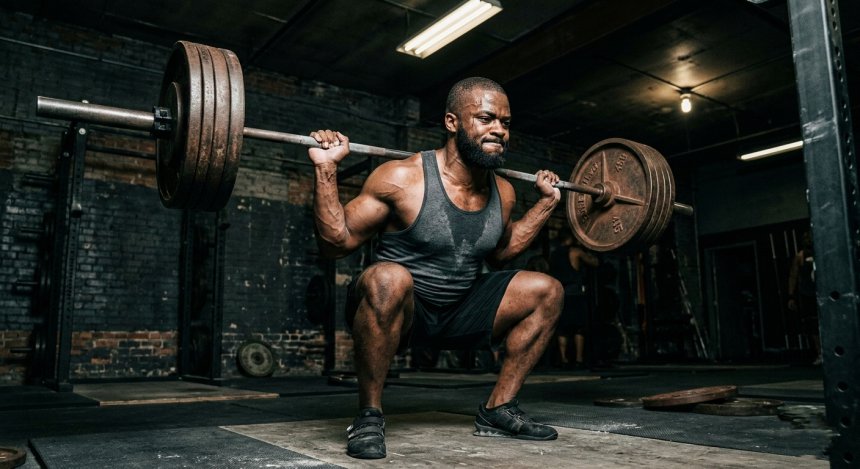
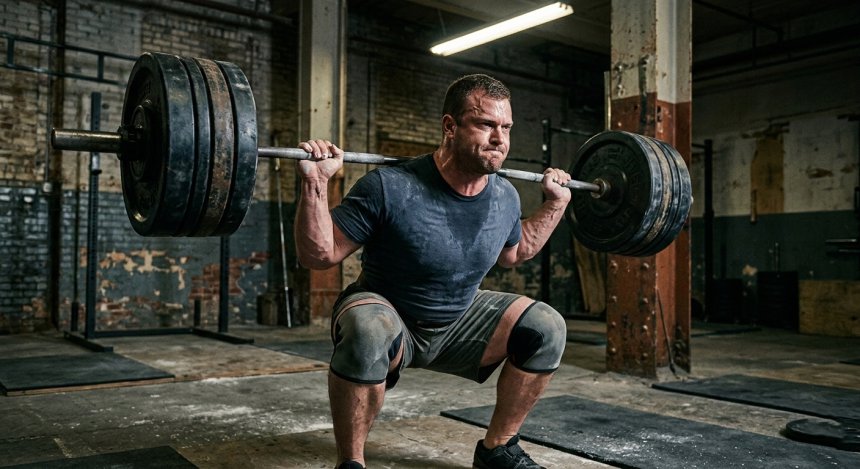
I’m not talking about the light "toning" weights or the cardio machines. I’m talking about Heavy Lifting. The kind of lifting where you have to brace your core, grit your teeth, and conquer a weight that threatens to crush you.
Here are the psychological benefits of heavy lifting that have nothing to do with how you look in a tank top, and everything to do with forging an unshakable mind.
The Primal Connection: Why Your Brain Craves Load
To understand why lifting heavy feels so good mentally, we have to go back about 10,000 years. For the vast majority of human evolution, a man’s value was tied to his physical output. If you couldn't lift, carry, or hunt, you didn't survive. Your brain is still wired for that reality.
When you engage in heavy resistance training, you are satisfying a deep, primal need. You are proving to the ancient part of your brain that you are still capable, still strong, and still a survivor. This alignment between modern life and ancestral wiring creates a unique sense of calm and satisfaction that you simply cannot get from sitting at a desk all day.
Here's why this matters: We spend our days typing emails, scrolling social media, and dealing with abstract stressors. This leaves us feeling "soft" and anxious. Heavy lifting reminds your nervous system that you are, in fact, a capable physical being.
1. The Mastery of Mood: Sweating Out the Stress
We all know about the "runner's high," but let’s talk about the lifter’s clarity. The biochemistry of heavy lifting is arguably superior for mental health than steady-state cardio.
The Neurochemical Cocktail
When you lift heavy, you aren't just getting a pump; you are flooding your system with a potent mix of brain-altering chemicals:
· Endorphins: The body’s natural painkillers. They don't just mask the pain of the lift; they create a mild euphoria post-workout.
· Dopamine: The "reward" chemical. Every time you hit a new personal record (PR) or even just complete a difficult set, your brain rewards you with a hit of dopamine. This increases your drive and motivation in other areas of life.
· Norepinephrine: This increases your alertness and focus. It’s why the mental fog lifts after a heavy squat session.
· Testosterone: While often maligned, healthy testosterone levels are crucial for energy, confidence, and resilience against depression. Compound heavy lifts (Squats, Deadlifts) are the most effective natural stimulus for testosterone production.
Let me show you how this works practically:
Imagine you’ve had a terrible day. Your boss criticized you, traffic was a nightmare, and you feel powerless. If you go home and sit on the couch, those stress hormones (cortisol) stay elevated. You ruminate. You feel worse.
If you go to the gym and squat a heavy weight, something magical happens. You are forcing your body to deal with an immediate, physical stressor. Your brain is smart; it prioritizes the 400lbs on your back over the abstract stress from work. It releases the chemicals needed to handle this load. When you rerack the weight, the cortisol drops, and the feel-good neurotransmitters flood in. You have literally swept the mental slate clean.
2. Forging Self-Efficacy: The "I Can" Spillover
This is the most important psychological benefit that is almost always overlooked by the glossy fitness magazines.
Self-efficacy is a term coined by psychologist Albert Bandura. It’s the belief in your ability to succeed in specific situations or accomplish a task. It’s the foundation of confidence.
There is no faking self-efficacy. You can’t read an affirmation in the mirror and truly believe you are capable. You have to prove it to yourself.
Heavy lifting is the ultimate, undeniable proof of competence.
When you Deadlift 405lbs for the first time, you create a data point in your brain. You have objective proof that you are strong. You didn't just think you could do it; you did it.
The Spillover Effect
Here’s where it gets good. That belief doesn't stay in the gym. It follows you everywhere.
· At Work: When a massive project lands on your desk, you don't panic. You think, "I moved a weight that could have crushed me. I can handle this spreadsheet."
· In Relationships: You become more grounded. You don't need external validation as much because you have internal proof of your worth.
· During Crisis: When life throws you a curveball, you have a deep-seated belief that you have the strength to endure it.
Therefore, every heavy set of 5 reps is not just building muscle fiber; it's building a bulletproof sense of self. You become a man who does hard things, not just one who talks about them.
3. The Meditation of Iron: Flow State and Mindfulness
If you’ve ever lifted seriously, you know this feeling. The gym noise fades away. Your peripheral vision narrows. There is only you, the bar, and the weight. The world stops.
Psychologists call this Flow State—being completely immersed in an activity to the point of losing track of time.
Lifting heavy is one of the most accessible paths to flow for men.
· It requires absolute focus: If you aren't 100% focused while squatting near-maximal weight, you will fail the lift—or worse, get hurt. The stakes force you into the present moment.
· It’s a moving meditation: Unlike sitting still and trying to clear your mind (which can be torture for an active mind), lifting gives you a focal point. The breath, the bracing, the push. It’s mindfulness in motion.
Recent data from studies in sports psychology suggests that high-intensity strength training induces a state of "transient hypofrontality"—a fancy term for temporarily shutting down the part of your brain responsible for high-level executive function, self-talk, and worrying. For that hour, the voice in your head that tells you you’re not good enough is silent. You are just a man moving weight.
4. Conquering the Mirror: From Self-Criticism to Self-Respect
We started this article talking about the mirror. But a fascinating psychological shift happens when you start lifting for performance (weight on the bar) versus aesthetics (look in the mirror).
When you focus on "heavy," your relationship with your body changes.
· The "Weak Point" Obsession Ends: You stop obsessing over your small calves or your "lagging" biceps. Instead, you marvel at what your body can do. You just hit a new Deadlift PR? Your legs are strong, not "too short." Your grip held the weight, not "your forearms are small."
· Process Over Product: Aesthetics are a fickle goal. You can diet down and feel tiny. You can bulk up and feel fat. It’s a rollercoaster. Strength, however, is linear. It builds over time. This shift from an external goal (looking good) to an internal goal (being strong) is the key to long-term mental satisfaction.
You begin to respect your body for its utility, not just its appearance. And from that respect grows genuine, unshakable confidence.
5. Brotherhood Without Words: The Social Connection
We are often told that men need to open up more and talk about their feelings. While there is truth to that, the gym offers a different kind of social connection that feels more natural to many men.
It’s the nod of respect to the guy deadlifting 500lbs. It’s the spotter who steps in when you need that last, gut-wrenching rep. It’s the shared experience of suffering and growth.
Heavy lifting creates a non-verbal bond. You are in the trenches together. You don't need to talk about your feelings with the guy who helps you rerack the bar; you just know you have each other's backs. This sense of belonging and camaraderie is a powerful antidote to the isolation that plagues modern men.
A Note on the Pain Point: "I'm Too Old to Lift Heavy"
I hear this constantly from men over 40. They think heavy lifting is for the 20-somethings throwing weights around. They stick to machines and light weights to protect their joints.
Here's the truth: Motion is lotion. Heavy lifting, when done with proper form, strengthens the connective tissues—the ligaments and tendons that keep you together. It increases bone density, fighting off osteoporosis. It keeps your testosterone levels from plummeting.
If you are 45 and afraid to squat, you are accelerating your decline. The psychological benefit of knowing you are getting stronger as you age, rather than weaker, is immeasurable. It’s the difference between feeling like you're in the twilight of your life and feeling like you're in your prime.
How to Start: A Psychological Guide to Your First Heavy Session
Ready to unlock these benefits? You don't need a complicated "bro split." You need a philosophy.
1. Choose the Right Lifts
Focus on the Compound Movements. These require the most neural drive and provide the biggest psychological payoff.
· The Squat: The king. It forces you to brace against the world.
· The Deadlift: The primal pull. It teaches you to pick up the heavy burdens in life.
· The Bench Press: The measure of upper body pushing power.
· The Overhead Press: The ultimate test of total body tension.
2. Use the Right Reps
To get the psychological benefits of "heavy," you need to be in a rep range where the weight feels genuinely difficult.
· Aim for sets of 3 to 8 reps.
· The last 2-3 reps of each set should be a real challenge.
3. Master the Breath (The Mental Anchor)
Before you unrack the weight, take a deep breath into your belly (not your chest). Hold it. Brace your core like you're about to be punched.
· This act of conscious breathing and bracing signals to your nervous system that you are in control. It’s a form of "box breathing" under load. It calms the panic and focuses the mind.
4. Keep a Training Log
This isn't just for tracking weight. It’s for mental reinforcement. When you look back and see that 6 months ago, 225lbs felt heavy, and now you're repping it, you have visual proof of your progress. On days when you feel like a failure in life, open that log. It will remind you that you are a man who progresses.
The Bottom Line: What Kind of Man Do You Want to Be?
There are two types of men in this world.
The first type walks through life feeling at the mercy of their environment. They are anxious, reactive, and unsure of their place in the world. They look for external validation.
The second type is forged. They have faced the iron, and the iron has tested them. They have learned that they can handle immense pressure. They walk with a quiet confidence because they don't hope they are strong enough; they know they are.
The psychological benefits of heavy lifting are not a secret conspiracy theory. They are rooted in our biology and our psychology.
So, step away from the mirror. Stop worrying about whether your abs are showing. Go to the gym, load that bar with a weight that scares you a little bit, and discover the man on the other side.
Your mind is waiting.
Frequently Asked Questions
Q: How heavy is "heavy"?
A: "Heavy" is relative to you. It’s a weight that challenges you to complete the last few reps of your set with good form. It’s usually 75-90% of the maximum weight you can lift for one rep.
Q: Do I need to lift heavy every day?
A: No. Heavy lifting is stressful on the central nervous system. 2-3 times a week is plenty to reap the psychological rewards. The other days, focus on mobility, cardio, or active recovery.
Q: Can I get these benefits from bodyweight exercises?
A: To a point. Bodyweight exercises are great for muscular endurance, but they lack the "bracing against an external load" factor that triggers the deepest psychological response. To get truly heavy, you need external resistance.
Q: What if I get hurt?
A: Form is king. Prioritize technique over ego. Consider hiring a coach for a few sessions to learn the major lifts. Ego lifting (lifting with bad form just to say you did it) is the enemy of both physical and mental progress.
Share
What's Your Reaction?
 Like
0
Like
0
 Dislike
0
Dislike
0
 Love
0
Love
0
 Funny
0
Funny
0
 Angry
0
Angry
0
 Sad
0
Sad
0
 Wow
0
Wow
0