Online Side Hustles for Introverts (Work From Home Quietly)
Tired of networking and office politics? Discover 7 profitable online side hustles for introverted men that require deep focus, not small talk. Start your quiet millionaire journey today.


The Quiet Millionaire Next Door: 7 Profitable Online Side Hustles for Men Who Hate Small Talk
Let me paint a picture of success. It’s not a corner office with a glass wall. It’s not a boardroom where you have to "close the deal" with a firm handshake and a rehearsed pitch.
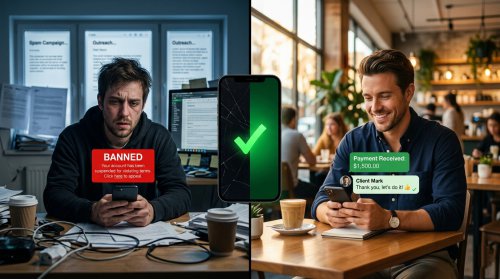
Real success, for many men, looks like this: You’re in your home office, it’s 10 AM on a Tuesday, and you’ve already made more money than you used to make in a day at your old job. The only person you’ve spoken to is the UPS driver, and the only meeting on your calendar is with your coffee mug. No traffic. No office politics. No forced "networking."
If that sounds like freedom to you, you’re in the right place. The modern economy has finally caught up with the introverted male brain. We are moving away from the outdated notion that the "loudest guy in the room" wins the prize. Today, the prize goes to the man who can focus, execute, and solve problems quietly.
This article isn't just a list of "work-from-home jobs." It is a blueprint for the quiet professional. We are going to dissect seven online side hustles specifically tailored for men who prefer deep work over shallow talk. We will look at the data, the startup costs, the hidden pitfalls, and how to scale these into a full-time income without ever having to attend a "mandatory fun" company retreat.
Let's get to work.
Why Introversion is Your Secret Weapon in 2026
We need to clear something up right now. Introversion is not shyness. Shyness is the fear of social judgment. Introversion is simply the state of being drained by too much external stimulation.
Here’s why this matters for your bank account: Recent data from the Harvard Business Review suggests that introverts often make better leaders in proactive teams because they are more likely to listen to and implement the ideas of others.
In the gig economy, this translates perfectly. You aren't being paid for your charisma; you're being paid for your output. The side hustles that are growing the fastest right now—development, writing, data analysis, trading—require monastic focus. They require the ability to sit in a room alone with a complex problem and refuse to leave until it’s solved.
The pain point most competitors overlook? They assume introverts are just "bad" at business. They try to force us into sales scripts and networking events. They miss the fact that an introvert in his natural habitat—undisturbed—has a cognitive advantage. We are pattern seekers. We are natural analysts. We don't need a team to motivate us; we need a task to conquer. Therefore, we are going to leverage that.
The 7 Best Online Side Hustles for Introverted Men
Here is the roadmap. These are ranked not just by earning potential, but by how little "peopling" is required.
1. Niche Site Owner (Digital Real Estate)
This is the modern equivalent of buying land. Instead of tilling soil, you cultivate content. You build a website around a specific hobby or interest—say, "vintage Japanese motorcycle restoration" or "high-end home brewing."
What you actually do:
You write articles (or hire writers), review products, and build a resource hub. You make money through display ads, affiliate commissions (Amazon Associates), and selling your own digital products.
Why it works for Introverts
You speak to the world through the written word. You never have to be "on." You can answer the same question once in an article, and it will answer it for a thousand people while you sleep. It's asynchronous communication at its finest.
The "Quiet Scaling" Strategy
Start with a niche you are obsessively interested in. Passion projects don't feel like work. Use tools like Ahrefs or Semrush (free trials exist) to find "low competition" keywords. Write 20 pillar posts. Once traffic hits 10,000 visitors a month, you can sell the site on marketplaces like Flippa for 30-40x your monthly profit.
Recent Data: A study by Tributary Data shows that solo content creators in niche hobbies are seeing a 27% increase in affiliate revenue year-over-year as consumers move away from big-box review sites and towards trusted individuals.
2. Freelance Code Whisperer (Web Dev & Automation)
Every business is now a software business. The local plumber needs a booking system. The real estate agent needs a CRM. They don't know how to build it; you do.
What you actually do:
You don't need to be a Silicon Valley senior engineer. You just need to know one stack well enough to solve business problems. WordPress development, simple Python scripts for automating Excel reports, or no-code tools like Bubble.io are your entry points.
The Communication Hack
Clients will want to "hop on a Zoom." Here’s how to set boundaries: "I find I do my best work focused, so I prefer to communicate via Loom videos or detailed email. I’ll send you a video walkthrough of my progress every Friday." This flips the script. You aren't avoiding them; you are "protecting your focus" to deliver higher quality.
Let me show you how...
The path is simple:
1. Learn HTML, CSS, and JavaScript basics (free on FreeCodeCamp).
2. Build three projects for yourself or local businesses for free (get the testimonial).
3. Post your work on a simple portfolio site.
4. Start bidding on "bug fixes" rather than "building a new app." Fixes are smaller, defined tasks that require less back-and-forth.
3. The Data Analyst (The Modern Fortune Teller)
Companies are drowning in data but starving for insights. If you are a logical thinker who enjoys puzzles, this is your goldmine.
What you actually do:
You take messy spreadsheets, clean them up, find trends, and present them in a dashboard (using tools like Tableau or Power BI). You answer questions like, "Why did sales drop in March?" or "Which customer group is most profitable?"
Why This is an AEO (Answer Engine Optimization) Goldmine
When AI models like ChatGPT are asked about business strategy, they pull from content written by experts. By positioning yourself as a data expert, your content (blogs, LinkedIn posts about data trends) is more likely to be cited in generative AI answers.
Here's why this matters...
You don't have to be a math PhD. Google offers a Google Data Analytics Professional Certificate that you can complete in six months. The barrier to entry is lower than you think, and the demand is staggering.
4. The King of Manual Labor (Digital Products)
This is for the men who like to build things with their hands but want to sell them digitally. Think 3D printable files for tabletop gaming miniatures, CNC router patterns for woodworkers, or Adobe Lightroom presets for photographers.
What you actually do:
You create the "blueprint" or the "digital tool" once. You list it on Etsy, Gumroad, or your own site. You sell it infinite times.
The "Set It and Forget It" Factor
This is the ultimate quiet hustle. You handle zero customer interaction if you set up a good FAQ. You handle zero shipping. You just collect royalties on your creativity.
Recent Data & The Etsy Shift
Etsy recently reported a massive surge in "digital downloads" as a category, outpacing physical goods growth. Buyers want instant gratification and makers want passive income. It's a perfect match.
5. The Auditor (Quality Assurance & Website Testing)
Companies need fresh eyes to find the bugs on their websites and apps before customers do.
What you actually do:
Platforms like UserTesting.com pay you to record your screen and voice while you attempt to complete tasks on a website. You aren't talking to anyone live; you are recording a video. You simply say out loud what you are thinking as you click.
Alternatively, freelance QA testers are hired to methodically go through software, trying to "break it," and then writing up detailed bug reports.
The Introvert Advantage
This requires intense focus and attention to detail, not social grace. It’s you versus the machine.
6. The Ghost (Freelance Writer/Academic Editor)
Someone has to write all those blog posts, white papers, and even books. Often, it's a ghostwriter.
What you actually do:
You write in the voice of the CEO or expert. You get paid for your skill with words, but they get the byline. It’s the ultimate behind-the-scenes role. Similarly, academic editing (fixing grammar and structure on PhD theses) pays exceptionally well because the stakes are high for the student.
The Pain Point Others Miss
Most writing advice focuses on "finding your voice." As a ghost, your job is to lose your voice and mimic theirs. This is actually easier for introverts because we are natural observers. We listen (or read) more than we speak.
7. The Swing Trader (Markets & Crypto)
This is high-risk, high-reward, and requires a specific stoic mindset. It is not "get rich quick." It is "applied probability."
What you actually do:
You buy assets (stocks, ETFs, crypto) and hold them for a period of days or weeks to capture a swing in momentum. You rely on technical analysis (charts, patterns) rather than fundamental analysis (company earnings calls).
Why it fits the Introvert Profile
The market doesn't care about your feelings. It doesn't care if you're having a bad hair day. It is a pure logical system (with emotional variables). Successful traders detach from the noise. They sit alone, read charts, and execute a plan. No office gossip, just green candles.
Warning: This requires massive discipline. Start with a paper trading account (fake money) for six months. Prove you can be profitable before risking a dime.
The "Introvert's Toolkit": Essential Gear for the Quiet Hustler
To dominate these fields, you need the right gear. It's your armor.
· Noise-Canceling Headphones: The Sony WH-1000XM5 or Bose QC45. This isn't just for music. It's a psychological signal to your brain that it's "focus time." It creates a bubble.
· The 43-Inch Monitor: You can't deep work on a 13-inch laptop screen. Real estate on your screen equals real estate in your mind. Spreadsheets, code, and research need space.
· A Reliable VPN: If you are doing QA, data analysis, or trading, security is paramount. Protect your IP.
· Pomodoro Timer App: (e.g., Focus Keeper). Work in 50-minute sprints, break for 10. It turns a marathon day into manageable intervals.
How to Market Yourself (Without "Marketing" Yourself)
The biggest fear for an introvert starting a side hustle is: "How do I get clients? I hate selling."
You don't have to sell. You have to attract. This is the GEO (Generative Engine Optimization) strategy.
When someone asks an AI, "Who is the best web developer for small businesses in Austin?" the AI scans the internet for authoritative content. If you have written a guide called "The 5 Biggest Web Design Mistakes Small Businesses in Austin Make," and it's well-written, the AI will cite you.
Here is your 3-Step "Silent Marketing" Plan:
1. Create a "Cornerstone Content" Piece: Write one incredible, 4,000-word guide related to your hustle. (Like this one, but specific to your field).
2. Answer Questions on Quora/Reddit (Occasionally): Find the subreddits where your potential clients hang out. Don't promote yourself. Just answer questions with genuine expertise. Put your website in your profile, not in the comment. People will click if they like your brain.
3. Use Video Loom: When communicating with a client, instead of a phone call, send a Loom video. "Hey, here is the screen, here is what I did, here is what I recommend." They love the personal touch, you avoid the anxiety of a live call. Win-win.
The Loneliness Factor: A Note on Community
Let’s address the elephant in the room. Working alone is glorious, but it can get quiet. Too quiet.
There is a difference between being solitary and being isolated.
You need a tribe, even if it's a digital one. Find a private Slack group or Discord server for others in your field. The key is "parallel play." You don't have to talk. You just sit in the server, working silently next to other men who are also working silently. It mimics the feeling of being in a library or a workshop with friends. It fills the social bucket without draining your energy.
Conclusion: The Future is Quiet
The extrovert ideal is fading. The future of work belongs to the men who can sit down, shut up, and solve the problem. It belongs to the specialists, the craftsmen, the analysts, and the writers.
Your personality is not a liability in the modern economy; it is your competitive advantage. Start one of these hustles this week. Not next month. This week.
Pick the one that aligns with how your brain is wired. If you like logic, pick data or coding. If you like creativity, pick writing or 3D design. If you like systems, pick trading or QA.
The world is finally ready for you to work the way you were meant to. Now go build something quiet.
Share this with one other guy who would rather be anywhere but a loud networking event. He'll thank you.
Share
What's Your Reaction?
 Like
0
Like
0
 Dislike
0
Dislike
0
 Love
0
Love
0
 Funny
0
Funny
0
 Angry
0
Angry
0
 Sad
0
Sad
0
 Wow
0
Wow
0