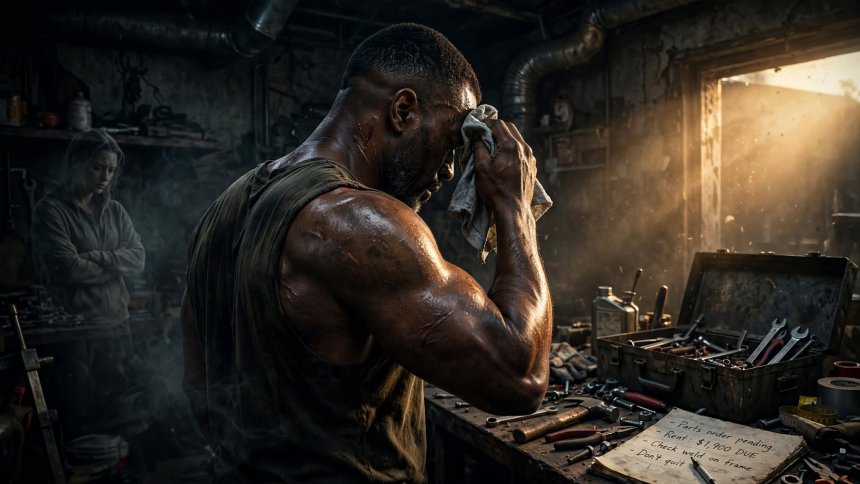
Why Blue-Collar Trades Are Making a Comeback for Real Men
Forge a life of purpose, not paperwork. Discover why skilled blue-collar tradesmen now earn $100k+ with zero debt, unbreakable job security, and tangible pride. This is the data-driven guide to the most intelligent, high-demand career comeback for men today.

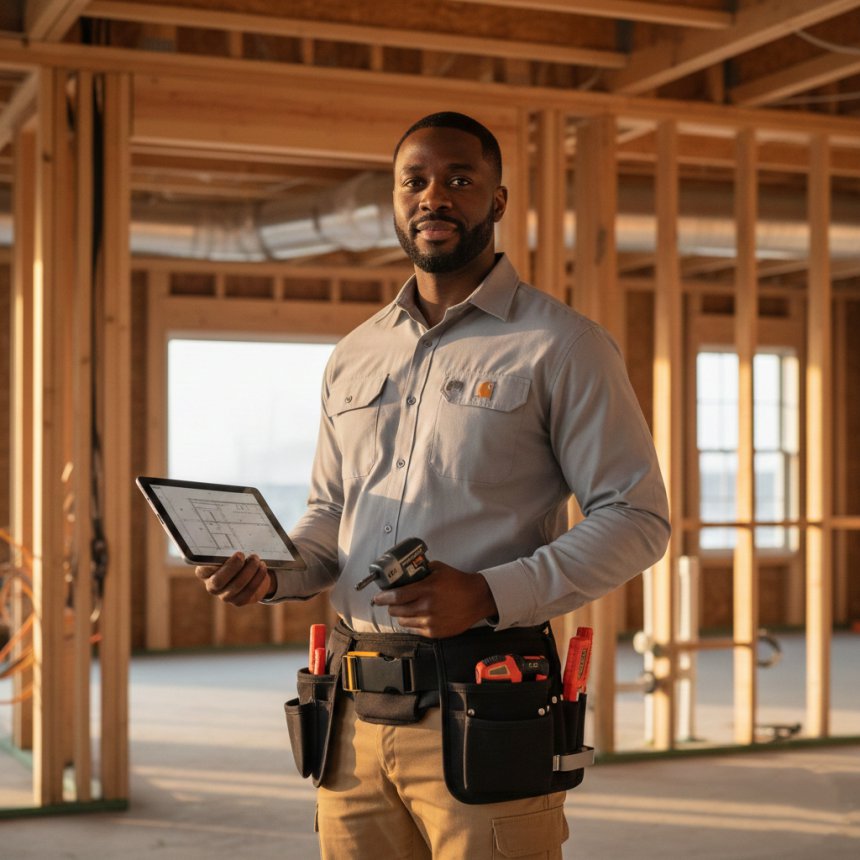
Why Blue-Collar Trades Are Making a Comeback for Real Men: Reclaiming Purpose, Paycheck, and Pride
Forget the corner office—the real revolution in men’s work is happening on the jobsite, in the weld shop, and under the hood, where the pay is soaring, the demand is insatiable, and a sense of tangible purpose is being reclaimed by men who are done asking for permission to build something real.
Let’s cut through the noise. For decades, a corrosive narrative pushed on young men said that success, respect, and a real future required a four-year degree, a white-collar uniform, and a life behind a screen in a sterile office park. The trades? They were framed as a consolation prize—dirty, dead-end jobs for those who couldn’t hack "real" work. That lie is now collapsing under its own weight, and a seismic shift is underway. Blue-collar trades aren't just surviving; they are experiencing a historic, roaring comeback. And for men seeking authentic achievement, unshakeable stability, and a life of concrete results, this isn’t just a career path—it’s a renaissance.
This isn't a romanticized pipe dream. It's data-driven, economically brutal, and personally transformative reality. We’re talking about a landscape where skilled electricians, plumbers, welders, and HVAC technicians routinely out-earn college graduates by their mid-20s with zero student debt, where job security is ironclad because society literally cannot function without these skills, and where the psychological reward of building, fixing, and maintaining the bones of civilization is unmatched. This is the definitive guide to why this comeback is real, permanent, and perhaps the most intelligent choice a pragmatic, capable man can make today.
The Collapse of the False Promise: Why the Office Job Betrayed a Generation
First, understand what we’re moving from. The "college-for-all" mandate created a glut of degree-holders saddled with an average of $37,000 in student debt, competing for a shrinking pool of middle-management roles that are increasingly automated, outsourced, or devoid of meaning. The modern office has become a minefield of abstract KPIs, virtual meetings about synergy, and a pervasive sense of fungibility—you’re a cost center, a line item, easily replaced.
For men wired to solve problems, to see physical progress, and to provide in a direct, unambiguous way, this environment is soul-crushing. It offers no tangible proof of a day’s work. There’s no engine that purrs because you fixed it, no house that stands solid because you framed it, no electrical grid that powers a hospital because you wired it. The promise was security and status; the reality is anxiety, commoditization, and a paycheck that’s often stagnant when adjusted for inflation.
Meanwhile, as this white-collar pool overflowed, we committed national economic malpractice: we vilified and abandoned the trades. Shop classes were ripped out of high schools. Guidance counselors sneered at apprenticeship programs. The result? A catastrophic skilled labor shortage. The average age of a master plumber or electrician in the U.S. is now over 55. They are retiring in droves, and for over a decade, almost no one was trained to replace them.
This created a perfect storm: collapsing supply, exploding demand.
The Brutal Economics: Demand, Pay, and Power You Can Bank On
Let’s talk numbers, because sentiment is nothing without cold, hard cash.
· The Debt-Free Launch: A four-year degree often means a $100,000+ head start in the hole. A union or non-union apprenticeship? You get paid to learn. You earn a living wage from day one, with raises structured to your skill progression. You graduate as a journeyman with a top-tier skill, zero debt, and often, a portfolio of real-world projects.
· The Earning Curve: While the college grad is an entry-level analyst making $55k and hoping for a 3% raise, a licensed plumber or electrician in a major metro area can easily clear $80,000 to $100,000+ annually by age 25. Master tradesmen running their own businesses? $150,000 to $250,000 is not uncommon. In specialized welding (e.g., underwater, pipeline, nuclear) or industrial instrumentation, six figures is the baseline.
· The Recession-Proof Truth: People’s pipes burst in a downturn. HVAC systems fail in a bear market. The electrical grid needs maintenance regardless of the Fed’s interest rate. Trades are non-outsourceable and non-postponable. You can’t ship a house rewiring to another country, and you can’t fix a broken furnace with an app. This isn’t job security; it’s civilizational necessity.
· The Entrepreneurial Shortcut: The path to business ownership is more direct here than in any other field. With 5-10 years of skilled experience, a truck, tools, a license, and a reputation for quality, you are a business. There’s no need for venture capital. Your brand is your name, your work ethic, and the referral network you build with every satisfied customer. You answer to the work, not a corporate hierarchy.
The Psychological Paycheck: What No Office Job Can Ever Provide
The financials are compelling, but the true comeback is driven by something deeper: a crisis of masculine purpose. Men are hardwired for competence, mastery, and legacy. The trades deliver this in spades.
1. Tangible Achievement: At the end of the day, you point to something and say, "I built that," or "I fixed that." This provides a profound psychological feedback loop absent in most modern work. The pride in craftsmanship is a primal, deeply satisfying reward.
2. Problem-Solving Sovereignty: You are not a cog. You are the expert on the jobsite. You diagnose complex, real-world problems with your knowledge, your hands, and your tools. You devise the solution and execute it. This autonomy and responsibility forge genuine confidence.
3. Physicality and Presence: The work requires strength, stamina, and skill. It keeps you in the real world, working with materials, forces, and physics. This physical engagement is healthy, counteracting the sedentary, abstract life that erodes mental and physical health.
4. Essential Service: You are not optimizing ad-click revenue. You are ensuring clean water, safe wiring, climate control, and structural integrity. Your work directly contributes to public health, safety, and quality of life. This isn’t a job; it’s a vocation.
The New Blue-Collar: Technology Meets the Torch
This comeback isn’t about reverting to the 1950s. The modern tradesman is a technician, an engineer, and an entrepreneur. He uses GPS and CAD software for site layout, advanced diagnostic tablets for HVAC systems, and robotic welding assist for precision work. He markets his business on Instagram, manages his invoices in the cloud, and continues his education on new sustainable technologies and building codes. This is skilled, intellectually demanding STEM work that happens to result in a physical product.
The Path In: Apprenticeship - The Ultimate "Show Me, Don’t Tell Me" Model
The gateway is the apprenticeship, the oldest and most effective form of education: learning by doing, under a master. Here’s the straightforward path:
1. Identify Your Aptitude: Are you drawn to electrical systems (electrician), water and gas (plumber), climate (HVAC), structural metal (welder), or building frames (carpenter)? Research the day-to-day.
2. Find a Program: Union programs (IBEW for electricians, UA for plumbers/pipefitters) are gold standards, offering structured, multi-year apprenticeships with top-tier training and benefits. Non-union associations (like ABC) and direct hiring by contractors are also excellent paths.
3. Apply and Compete: These are competitive. Show up. Be physically prepared, drug-free, humble, and hungry. Demonstrate work ethic, math aptitude, and a willingness to learn. They’re not looking for finished experts; they’re looking for coachable men with grit.
4. Embrace the Grind: The first years are tough. You’re the new guy. You’ll do the heavy lifting, the cleanup, the "go-fer" work. Pay your dues. Watch, listen, and learn. The journeyman and master ahead of you hold knowledge worth more than any college lecture.
5. Master Your Craft: Get licensed. Get certified. Specialize. Become the guy everyone calls for the impossible problem. Your reputation becomes your greatest asset.
Addressing the Objections Head-On (The Brutal Truth)
· "It’s too hard on your body." Truth: It is physical. So is obesity, diabetes, and a sedentary life. Smart tradesmen work with ergonomics, use technology, and transition to foreman, inspector, estimator, or business owner roles as they choose. You build a body of work, and then you build a business on it.
· "There’s no status." Status is control. Status is the respect of your peers and clients who rely on you. Status is pulling up to your fully-owned home in a paid-off truck while your college-peer is sitting in traffic, stressing over his mortgage and his meaningless TPS reports. Redefine status on your own terms: competence, independence, and results.
· "It’s just a job." A job is a transaction. A trade is an identity. It’s a skillset that cannot be taken from you. It’s a guild, a tradition of mastery that stretches back centuries. It is the literal foundation upon which the abstract economy sits.
The Bottom Line: A Call to Build
The comeback of the blue-collar trades for real men is a correction. It’s the market, human psychology, and common sense reasserting themselves after a failed social experiment.
This is not a retreat. It is an advance toward a life of agency, authenticity, and abundance. It is a rejection of a system that asks men to be passive, dependent, and abstract in exchange for the illusion of safety.
The world is literally falling apart—our infrastructure is crumbling, our homes need updating, our energy grid needs retrofitting. The men who step up to repair, rebuild, and reinvent it will not be pitied. They will be needed, respected, and handsomely paid. They will go to bed tired from honest work and wake up knowing exactly who they are and what they are capable of.
The path is open. The training is available. The work is waiting. The only question left is: Do you want to push paper for a system, or do you want to build something that lasts? The real men are already on the jobsite. The comeback is here. It’s time to pick up your tools and join them.
Share
What's Your Reaction?
 Like
0
Like
0
 Dislike
0
Dislike
0
 Love
0
Love
0
 Funny
0
Funny
0
 Angry
0
Angry
0
 Sad
0
Sad
0
 Wow
0
Wow
0