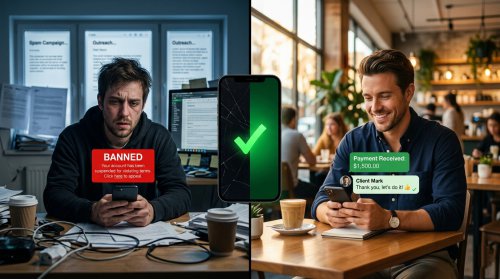
The Dark Art of Persuasion: How to Win Any Negotiation
Unlock the forbidden playbook of persuasion.This is not another "win-win" guide. Dive into the Dark Art of Negotiation with a former FBI negotiator's insights. Master covert psychological tactics, linguistic frames, and advanced strategies to ethically dominate any negotiation. Your ultimate advantage awaits.


They told you everything was about "win-win." They were wrong.
In the hushed corridors of power, in the silent, tense moments before a multi-million dollar deal is signed, and in the critical conversations that dictate the trajectory of your career and life, a different set of rules applies. This is the shadowy realm of high-stakes negotiation, a psychological battlefield where the unprepared are systematically dismantled and the initiated wield influence like a surgical instrument.
Forget what you learned in that corporate seminar. This is not about finding common ground; it's about strategically shaping the terrain so the common ground is your ground. This is the Dark Art of Persuasion—a disciplined, psychologically-grounded framework used by elite negotiators from the FBI’s Hostage Negotiation Team to the world's most formidable dealmakers. It’s not about manipulation for malicious ends, but about understanding the deepest drivers of human behavior to ethically and decisively steer any interaction toward your desired outcome.
I’ve been in that room. I’ve negotiated with terrorists, with billion-dollar CEOs who see empathy as a weakness, and with individuals who had nothing left to lose. The principles I will share with you are the same ones that saved lives, built fortunes, and forged unbreakable alliances. This is your forbidden playbook.
Section 1: Laying the Foundation - The Mindset of a Master Persuader
Before a single word is spoken, the battle is already won or lost in the mind. Your mindset is your primary weapon.
1.1. Embrace Tactical Empathy, Not Sympathy
Sympathy is feeling for someone. Empathy is understanding with them. Tactical Empathy is the conscious, deliberate process of understanding another party's perspective, their emotional state, and their underlying drivers, and then using that understanding as a strategic asset.
It’s not about being nice; it’s about being effective. When you accurately label an opponent's fear ("It seems like you're worried about the timeline on this"), you do two things: you build immense rapport by demonstrating understanding, and you bring their hidden negative emotion to the surface, where it can be addressed and defused. You are not their therapist; you are a negotiator using their emotional state as a key variable in your equation for success.
1.2. The Unshakeable Pillar of Outcome-Independence
Your greatest weakness in any negotiation is your desire for a specific outcome. The moment you need the deal is the moment you lose all leverage. Outcome-independence is the psychological state of being perfectly calm and rational whether the negotiation succeeds or fails. You have a strong vision of your preferred outcome, but your self-worth and emotional stability are not tied to it.
How do you achieve this? By having a powerful BATNA (Best Alternative To a Negotiated Agreement). Your BATNA is your walk-away power. It is the concrete, actionable plan you will execute if the current negotiation fails. A strong BATNA isn't just a plan; it's a state of mind. It allows you to push harder, make bolder demands, and walk away from bad deals without a flicker of fear.
1.3. The Observer's Stance: Detach to Dominate
Master negotiators operate from a place of detached observation. They are not emotionally entangled in the back-and-forth. They are watching the process unfold as if from a third-person perspective, analyzing verbal and non-verbal cues, identifying patterns, and adjusting their strategy in real-time.
When your counterpart gets angry, you observe the anger. When they make a threat, you observe the threat. You do not react. You respond. This emotional discipline is unnerving to opponents who rely on pressure and bluster. Your calm becomes your most powerful non-verbal signal of control.
Section 2: The Pre-Negotiation Ritual - Intelligence is Everything
Walking into a negotiation unprepared is a form of professional suicide. The work you do before you sit at the table determines your success.
2.1. Profiling Your Adversary: The 360-Degree Reconnaissance
You must know your counterpart better than they know themselves. This goes beyond their company's annual report.
· Psychological Profile: Are they an innovator or a custodian? Are they driven by fear or by ambition? What are their personal and professional pressures? Scour their LinkedIn, interviews, and speeches for clues to their value system.
· Organizational Pressures: What are the KPIs (Key Performance Indicators) they are judged on? Is it cost-saving? Revenue growth? Speed to market? Aligning your proposal with their internal metrics is a masterstroke.
· Past Behavior Analysis: How have they negotiated in the past? Are they known for hardball tactics or for collaboration? History is the most reliable predictor of future behavior.
2.2. Defining Your "Red Lines" and "Aspirational Targets"
Most people set a single, vague goal. Masters operate within a defined range.
· The Walk-Away Point (Your Bottom Line): This is the absolute worst terms you will accept. It is non-negotiable. Crossing this line means you execute your BATNA. This must be decided before the negotiation begins.
· The Target Price (Your Aspirational Goal): This is your realistic best-case scenario. It should be ambitious but justifiable.
· The Anchor Point (Your Opening Offer): This is your initial, strategic offer, designed to pull the entire negotiation in your direction. We will delve into anchoring later.
2.3. Environmental Engineering: The Silent Negotiator
The physical (or virtual) environment is not a neutral container; it is an active participant.
· The Home Court Advantage: Negotiating on your turf gives you a subtle psychological edge. You control the seating, the temperature, the refreshments. You are in your familiar, comfortable space.
· Neutral Territory: If "home court" is too aggressive, a neutral location like a quiet restaurant or private club can level the playing field and reduce defensive posturing.
· Seating Arrangements: Avoid sitting directly opposite someone; it subconsciously creates an adversarial dynamic. Sitting at a 90-degree angle or side-by-side fosters collaboration.
· Virtual Negotiations: Ensure your background is professional and non-distracting. Your lighting and audio quality must be flawless. Technical proficiency signals competence and preparation.
Section 3: The Arsenal of Dark Arts - Covert Psychological Tactics
These are the advanced maneuvers that bypass conscious resistance and speak directly to the subconscious mind.
3.1. Strategic Anchoring: The Power of the First Offer
Whoever makes the first offer sets the mental "anchor point" for the entire negotiation. All subsequent counteroffers are made in relation to that initial number, no matter how outrageous it may seem.
The Science: The phenomenon of "anchoring bias" is one of the most robust in cognitive psychology. Our brains give disproportionate weight to the first piece of information received.
The Dark Art Application: You must be the one to anchor, and you must do so with a justifiably extreme number. If you believe a project is worth $50,000, you don't open with $50,000. You open with, "Based on the scope and the value we'll be delivering, our fee for this engagement is $85,000." You then immediately justify it with a rationale (ROI, unique expertise, premium results). The other party may be shocked, but their counter-offer of $60,000 now feels like a victory for them, when in reality, it's $10,000 above your original target. You have redefined the center of gravity.
3.2. The Framing Effect: Controlling the Narrative
Framing is not what you say, but how you contextually present it. The same information, framed differently, can lead to diametrically opposed decisions.
· Loss Aversion Frame: People are more motivated to avoid losses than to acquire equivalent gains. Instead of saying, "This software will increase your productivity by 20%," frame it as, "Without this software, you are losing 20% of your potential productivity every single day. That's like keeping your office closed every Friday." The pain of loss is a far more powerful driver.
· Attribute Framing: "This car is 95% reliable" sounds much better than "This car has a 5% failure rate." You are highlighting the positive attribute.
· Goal Framing: Frame your proposal as the only logical path to achieving their stated goals. You are not selling a marketing service; you are selling "a proven system to fill their sales pipeline with qualified leads, reducing their customer acquisition cost by 30%." You are speaking their language of outcomes.
3.3. The Illusion of Scarcity & Urgency
Perceived scarcity creates immense value. Perceived urgency triggers action.
The Dark Art Application: You must manufacture these perceptions ethically. It's not about lying; it's about highlighting genuine constraints.
· Scarcity: "My calendar for new consulting clients only has two slots remaining for this quarter." "We only have limited inventory of the premium model left." This isn't a lie if it's true, and it forces a decision.
· Urgency: "The project team I have assembled for you is available to start next Monday, but if we delay, their availability becomes uncertain." "This proposal is based on current Q3 pricing." These are not threats; they are factual statements that create a compelling reason to act now.
3.4. The Principle of Reciprocity: The Unseen Debt
Human beings are hardwired to feel obligated to return a favor. This is a profound social rule you can leverage.
This is not about giving a gift; it's about strategic concession-making. The key is to be the first to give, and to give something that is perceived as valuable by the other party, but is low-cost to you.
Example: You are negotiating a salary. Before you even state your number, you say, "I've been analyzing your competitor's market strategy, and I've prepared a one-page brief on three immediate opportunities I see for you. No charge, just to show you the kind of strategic thinking I'd bring to the role." You have just given value. You have created a subconscious debt. When you then make your ambitious salary request, the hiring manager is psychologically primed to reciprocate your "generosity" with a more favorable offer.
3.5. The Strategic Pause: Silence as a Weapon
In nature, silence is often a predator's tool. In negotiation, it is yours. The average person has a deep-seated psychological discomfort with silence. They feel compelled to fill the void, often by talking themselves into a concession.
After you make a key offer or they present a counter-offer, simply stop talking. Maintain comfortable eye contact and wait. The pressure will build exponentially on their side. They will begin to rationalize, justify, or—most importantly—improve their offer without you having to say a word. I have seen multi-million dollar terms sweetened simply because a trained negotiator had the discipline to endure 45 seconds of silence.
Section 4: The Linguistic Toolkit - Words That Cast Spells
Language is the interface of persuasion. Specific words and phrases have the power to lower defenses and open minds.
4.1. The "No-Oriented" Opening
Traditional advice says to get a "yes." This is wrong. Starting with questions that elicit a "no" is far more powerful. "No" makes people feel safe, secure, and in control. It's a protective mechanism.
Instead of: "Have you had a chance to look over the proposal?" (Which invites a defensive "yes" or "not yet").
Try:"Is now a bad time to talk?" or "Have you given up on this project?" These are "no-oriented" questions. The likely response is, "No, it's a fine time," or "No, we haven't given up." You have now engaged them from a position of comfort and control. You've bypassed initial resistance.
4.2. The Magic of "How" and "What"
Never use "why." "Why" triggers defensiveness. "Why did you do that?" sounds like an accusation. Instead, use "how" and "what," which trigger the problem-solving part of the brain.
· Instead of: "Why is your price so high?"
· Use: "How did you arrive at that specific number?" or "What are the key components that make up this value?"
· Instead of: "Why can't you meet the deadline?"
· Use: "What would need to happen for the deadline to become achievable?" or "How can we overcome this obstacle together?"
This reframing transforms confrontation into collaboration.
4.3. The Accusation Audit
This is a preemptive strike against negative thoughts. Before the other party can voice their primary objection or criticism, you voice it for them, in a calm, non-judgmental way.
Let's say you're selling a premium-priced service. You know their first thought will be, "This is too expensive." Don't wait for it.
Open with: "Look, most people's first reaction when they see our price is that it's astronomical, and that we're probably out of our minds. And I get it. It's a significant investment."
What have you done? You have taken their biggest weapon and disarmed it. By stating their objection, you demonstrate incredible empathy and honesty. The thought "This is too expensive" is now your thought, not theirs, and they are forced to abandon it and find a new, less powerful objection. It's a psychological judo throw.
4.4. Labeling and Mirroring: The FBI's Secret Sauce
Popularized by former FBI negotiator Chris Voss, these are two of the most powerful verbal tactics known.
· Labeling: This is the act of putting a tentative, empathetic label on an emotion you perceive. It starts with "It seems like..." "It sounds like..." or "It looks like..."
· "It seems like you're hesitant about the implementation timeline."
· "It sounds like you're passionate about getting this right."
· "It looks like the budget is a major concern here."
Labeling validates the emotion, builds rapport, and encourages the other party to elaborate, giving you more intelligence.
· Mirroring: This is the art of repeating the last one to three critical words your counterpart just said, with an upward, inquisitive inflection.
· Them: "We're looking for a more collaborative partner."
· You: "Collaborative partner?"
· Them: "Yes, we need someone who is more integrated with our team's workflow."
Mirroring forces the other person to elaborate on their own statement, revealing more information and clarifying their position, all while making them feel deeply listened to.
Section 5: Reading the Unspoken - The Mastery of Non-Verbals
Over 50% of communication is non-verbal. Learning this language is like gaining access to a private channel of communication.
5.1. Decoding Microexpressions
These are fleeting, involuntary facial expressions that reveal true emotion, often contradicting the spoken word. They last for less than half a second.
· Contempt: The most damning microexpression. One side of the mouth is pulled upwards and back. It signals disrespect and is a major red flag for deal failure.
· Disgust: A wrinkling of the nose, like smelling something bad. It indicates strong dislike for an idea or term.
· Fear: Eyebrows raised and pulled together, lips stretched horizontally.
When you spot a microexpression that contradicts the verbal message(e.g., they say "I'm happy with that" but flash a microexpression of disgust), trust the face, not the words. The face is telling you the truth.
5.2. The Power of Proxemics and Posture
· Posture: Leaning back can signal contemplation or power. Leaning in shows engagement. Crossed arms are typically a sign of defensiveness or closed-mindedness, not just comfort. Mirroring the other person's posture (subtly) can build rapport.
· Proxemics (Use of Space): Invading personal space is a power move that can create discomfort. Respecting space builds trust. Observe how they arrange their belongings on the table; it can signal territoriality or openness.
5.3. Vocalics: It's Not What You Say, It's How You Say It
· Pace: A sudden increase in speaking pace can indicate anxiety or excitement. A deliberate slowdown can signal gravity or an attempt to control the conversation.
· Tone: A downward, flat tone can indicate finality. An upward, lilting tone can suggest question or openness.
· Pauses: As discussed, strategic pauses are powerful. Nervous, filler-word-filled pauses ("um," "ah") signal anxiety and lack of preparation.
Section 6: Counter-Tactics - Defending Against the Dark Arts
You will face others who use these tactics. You must be prepared to disarm them.
6.1. How to Shatter a Bad Anchor
When faced with an outrageous opening offer, do not engage on its terms. Do not counter-offer immediately. You must first reject and re-anchor.
· The Shock and Dismay: Physically recoil. Let your face show shock. "Whoa. I have to be honest, that number is significantly higher than anything we were anticipating. That's a real surprise." You are psychologically rejecting their anchor before it can take hold.
· The Pinpoint Counter: "I'd like to understand how you arrived at that figure. Could you please break down the cost components for me?" This forces them to justify the unjustifiable and exposes the weakness of their anchor.
· Set Your Own Anchor: Only after you have thoroughly dismantled theirs do you introduce your own, well-justified anchor.
6.2. Defusing the "Take-It-or-Leave-It" Ultimatum
An ultimatum is an attempt to strip you of your power. Your response must be calm and procedural.
· Do Not React Emotionally. Maintain your observer's stance.
· Use a Calibrated "How" Question: "How am I supposed to accept that?" This puts the burden of solving the impasse back on them.
· Reframe as a Choice, Not a Threat: "I understand that's your current position. I see two paths forward: we can end this conversation now, which I don't believe is in either of our best interests, or we can explore if there's a way to structure this that works for both of us. Which would you prefer?" This calmly calls their bluff and re-establishes a collaborative (but firm) frame.
6.3. Handling the "Good Cop, Bad Cop" Routine
This is a classic for a reason—it works on the unprepared. The counter is simple: Label the dynamic.
Address the "good cop" and say, with a slight smile, "You know, I appreciate you being so reasonable. It seems like your colleague is playing the 'bad cop' role here to pressure me. I get the game, but it's not necessary. Why don't we just talk directly about what you both really need to make this work?"
By naming the game, you evaporate its power. You show you are too sophisticated for such a transparent tactic, and you force them to drop the act and negotiate in good faith.
Section 7: The Ethical Framework - Wielding Power Responsibly
This is the most critical section. The Dark Art is a powerful tool, and with great power comes great responsibility. Using these tactics unethically will destroy your reputation and relationships.
· The North Star: Mutual Benefit. The goal is not to crush the other party. The goal is to create a deal that is so good for you that it would be irrational for them to refuse, while still being a good deal for them. You are shaping perception to arrive at a fantastic outcome that might otherwise be missed.
· Never Lie. Lies are short-term tools with long-term consequences. Exaggeration and strategic framing are not the same as lying. One is presenting facts in a compelling light; the other is inventing facts. Your reputation for integrity is your most valuable asset.
· Know When to Walk Away. The ultimate power move is to politely and respectfully decline a deal that does not meet your standards. This preserves relationships for future opportunities and solidifies your position as a principled negotiator.
Top 5 Questions People Ask
These questions target high-intent searchers who are moving beyond basic "negotiation tips" and are looking for specific, advanced, and psychologically-grounded strategies.
1. Question: "How to negotiate salary when they ask for current compensation?"
Answer: This is a classic leverage trap. The company's goal is to anchor your offer to your past salary, not your future value. Your strategy must be to deflect and reframe.
· The Deflection Script: Respond with confident, positive language. Say: "I'm really excited about this role and the value I can bring to [Team/Project]. I'm sure we can agree on a competitive offer once we've established that I'm the right fit. For roles of this caliber, my salary expectations are in the range of [Your Target + 15%]."
· The Justification: You haven't lied. You've shifted the conversation from your past (which is irrelevant) to your future value and the role's market worth. You've also set a new, powerful anchor.
· If They Press Hard: If the recruiter insists, it's a test of your resolve. Calmly state: "My current compensation is confidential under my agreement with my previous employer, and it's not reflective of the market value for this new role with its expanded responsibilities. My focus is on ensuring a fair market value for this position." This positions you as professional, principled, and aware of your worth.
2. Question: "What to say when a negotiator says 'That's our final offer'?"
Answer: Treat this not as a wall, but as a door. Your goal is to test its authenticity and find a creative way through without directly challenging it.
· The Calibrated Question: Your first response should never be "No." Instead, use a "How" question to put the problem back on them: "I understand that's your position on the base salary. How are we supposed to move forward if that's truly the final number?" This forces them to problem-solve with you.
· The "If-Then" Probe: Follow up with: "Okay, if the base salary is truly locked, then what flexibility exists on the other components? Can we discuss a signing bonus, an accelerated performance review in 6 months, additional equity, or an enhanced vacation package?" You are accepting their "final" frame on one point to unlock value on others.
· The Walk-Away Power: If, after this exploration, the offer genuinely doesn't meet your minimum threshold and they are immovable, your prepared BATNA gives you the power to say: "I appreciate the offer and your time, but unfortunately, I won't be able to accept it at this level. I wish you the best of luck in your search." Often, this is when a "final" offer magically improves.
3. Question: "How to use silence effectively in a negotiation?"
Answer: Silence is not the absence of speech; it's a tool of immense psychological pressure. Most people fill silence with concessions or unnecessary information.
· The Post-Offer Pause: After you or they make an offer, stop talking. Count to 10 in your head. Maintain a neutral, thoughtful expression. The other party will often interpret your silence as dissatisfaction and will frequently improve their offer without any prompting.
· The Answer-Eliciting Pause: When asked a difficult question, don't rush to answer. A deliberate pause signals that you are giving the question serious thought, which elevates the perceived importance of both the question and your subsequent answer. It prevents you from blurting out a weak response.
· The Pressure Pause: When faced with an unreasonable demand, simply remain silent. Let the awkwardness hang in the air. The person who made the demand is forced to sit in the discomfort of their own ask and will often begin to backtrack or justify it, revealing their weaknesses.
4. Question: "How to prepare for a negotiation with a manipulative person?"
Answer: Preparation is your shield. You must armor yourself psychologically and procedurally.
· Pre-Write Your "Red Lines": Know your absolute walk-away points and have them written down in front of you. A manipulator will use emotion and pressure to cloud your judgment. Your pre-written notes are your objective reality.
· Use the "Broken Record" Technique: Manipulators will try to twist your words. Have 2-3 key phrases prepared and repeat them calmly and consistently. "As I stated, my requirement is X." "Based on my research, the market value is Y." Do not deviate or get drawn into circular arguments.
· Label Their Tactics: Calmly name the game. If they use guilt, say, "It seems like you're suggesting I'm being unfair for stating my needs." If they use false deadlines, ask, "What is the specific, business-driven reason that this decision must be made by 5 PM today?" Labeling robs the tactic of its power.
· Bring a Colleague: Have a second person in the room whose sole job is to observe, take notes, and maintain emotional detachment. They can be your reality check during and after the negotiation.
5. Question: "What are the best body language cues to show confidence?"
Answer: Your body broadcasts your state of mind before you speak. Control the broadcast.
· The Steeple: Gently touching your fingertips together, forming a "steeple," is a universal sign of confidence and authority. Use it when listening or making a key point.
· Postural Control: Sit or stand with a straight, but not rigid, spine. Lean slightly forward to show engagement, but avoid slouching or shrinking back. Take up a comfortable amount of space.
· Controlled Gestures: Use deliberate, open-palm gestures at chest level to emphasize points. Avoid fidgeting, touching your face, or crossing your arms tightly (which signals defensiveness).
· The Pacer's Gaze: Maintain strong, comfortable eye contact for about 60-70% of the time. When you break gaze, do so slowly to the side, not down (which can signal submission). This projects thoughtfulness and control.
FAQ Section (Addressing Common Doubts)
Q1: Isn't this just manipulation? What's the difference?
This is the most crucial distinction.Manipulation is deception for unilateral gain. It involves hiding your true intent, lying, or coercing someone into a decision that is bad for them. The Dark Art of Persuasion, as taught here, is influence for mutual benefit. It is about using a deep understanding of psychology to help the other party see the objective value in a proposal, overcome their own biases, and arrive at a better outcome with you. The core differentiator is Ethics and Intent. Our framework demands transparency on facts and a goal of creating a deal so good for you that it would be irrational for them to refuse, while still being a good deal for them.
Q2: I'm an introvert and don't like conflict. Can these tactics work for me?
Absolutely. In fact, introverts often make the most potent negotiators. The "Dark Art" is not about being the loudest or most aggressive person in the room. It's about being the most prepared, observant, and psychologically astute. Tactics like strategic silence, calibrated questions ("How?"/"What?"), and active listening are inherently introvert-friendly. They allow you to control the conversation through thoughtful inquiry rather than domineering speech. Your natural tendency to listen and process information is a significant advantage in reading the situation and responding with precision.
Q3: What if the other person is also an expert in these techniques?
You have entered a master-level game,which is often the most productive and rewarding type of negotiation. When both parties are skilled:
· The "games" and posturing fall away quickly, leading to more efficient, value-driven discussions.
· The negotiation becomes a collaborative problem-solving session, as both of you use tools like labeling and mirroring to achieve clarity.
· Your shared understanding of tactics creates a mutual respect. The focus shifts from "beating" each other to "crafting a brilliant deal together." In this scenario, your preparation (BATNA, red lines) becomes your ultimate guide, not trickery.
Q4: How do I practice this without risking a real-life deal?
Start low-stakes and deliberate.
· Role-Play: Enlist a friend or colleague to negotiate a mock scenario. Practice your anchoring, your calibrated questions, and dealing with hardball tactics. Debrief afterward.
· Everyday Life: Use these techniques in everyday situations—negotiating with a vendor, discussing plans with your partner, or even at a garage sale. The goal is not to "win" but to make the psychological tools feel natural.
· The Post-Mortem: After any real conversation (even a non-negotiation), conduct a quick mental review. What tactic did I use? What could I have said differently? How did they respond? This builds your reflective muscle.
Conclusion: The Art of the Inevitable Deal
The Dark Art of Persuasion is not a bag of cheap tricks. It is a disciplined philosophy of human interaction. It is the marriage of deep psychological insight, meticulous preparation, and masterful execution. When you embrace the mindset of tactical empathy and outcome-independence, when you wield linguistic and psychological tools with precision, and when you operate from a foundation of unwavering ethics, you stop "negotiating" and start orchestrating outcomes.
You will no longer fear difficult conversations; you will welcome them as opportunities to demonstrate your skill. You will no longer see your counterpart as an adversary to be beaten, but as a partner in a psychological dance, a dance you are now leading.
The next time you walk into that room, you will carry with you the quiet confidence of a master. You will have done the work. You will know the playbook. You will see the invisible strings of human motivation, and you will know exactly how to pull them. The result will feel, to the other party, not like a loss, but like the only logical, inevitable conclusion.
Now go and negotiate.
Share
What's Your Reaction?
 Like
0
Like
0
 Dislike
0
Dislike
0
 Love
0
Love
0
 Funny
0
Funny
0
 Angry
0
Angry
0
 Sad
0
Sad
0
 Wow
0
Wow
0