How to Teach Your Son Survival Skills Before He Turns 18
A former survival instructor's brutal 18-year blueprint for fathers. Teach your son mental toughness, emergency first aid, urban survival, and unshakeable confidence. This is not a hobby; it's his armor.

Forget the "Talk." This is the Brutally Honest Blueprint for Teaching Your Son to Survive and Thrive in a World That Doesn't Care About His Feelings.
Let's be brutally honest for a moment. The world won't coddle your son. It won't give him a participation trophy for showing up. It will throw him into chaos, uncertainty, and situations where his well-being—and the safety of those he loves—depends entirely on his competence, his judgment, and his unshakable nerve.
This isn't about teaching him to build a fire with sticks (though we'll cover that). This is about forging a man who is antifragile—who doesn't just survive pressure, but gets stronger from it. As a father who has trained military personnel, corporate leaders, and my own two sons, I can tell you this: the most profound gift you can give your boy is not a trust fund; it's a trust in himself. This guide is your roadmap.
We will break this down not by age, but by The Four Pillars of Survival: The Mind, The Body, The Environment, and The Tribe. Master these, and he won't just be "safe"—he will be capable, confident, and indispensable.
Pillar I: The Unbreakable Mind (The Foundation of Everything)
If his mind breaks, his skills are useless. This is the first and most critical battleground. Technical skills are simple; mental fortitude is a forged-in-fire discipline.
1. Cultivate Situational Awareness: Stop Being a Zombie
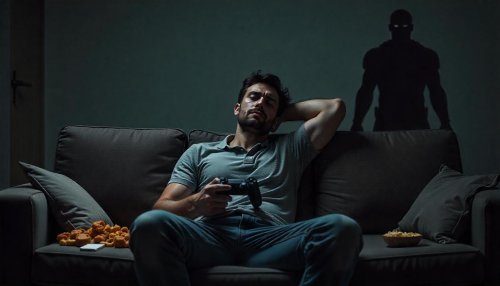
Your son walks through life with his head down, glued to a screen, wearing noise-canceling headphones. He is a soft target. This ends now.
· The "Color Code of Awareness" Drill: Teach him this simple, professional system.
· Condition White: Oblivious. Asleep in his bed. Unacceptable in public.
· Condition Yellow: Relaxed Alert. This is his baseline. Head is up, he's scanning his environment, noticing people, exits, and anomalies. It's not paranoid; it's professional. Practice this with him at the mall. "Son, point to the two nearest exits. Who is the most agitated person in this room? Where would you take cover right now if you had to?"
· Condition Orange: A specific potential threat is identified. "That man is arguing loudly and clenching his fists." His heart rate elevates, he creates distance, he plans his next move.
· Condition Red: Fight or Flight. The threat is active.
Your Action: Make "Condition Yellow" a non-negotiable family habit. Quiz him. Reward him for noticing things you didn't.
2. Teach Stress Inoculation: Embrace the Suck
His brain needs to learn how to function when flooded with cortisol and adrenaline. You can't simulate this in a calm, safe living room.
· The "Controlled Chaos" Workout: Make his physical training mentally demanding. Don't just have him run 3 miles. Have him run 3 miles, then solve a complex math problem or recite a poem from memory while his heart is pounding and he's gasping for air. This wires his brain to think under pressure.
· The "Cold Plunge" Principle: Whether it's a literal cold shower every morning or taking on a difficult, unpleasant task without complaint, teach him to voluntarily embrace discomfort. This is the ultimate hack for building resilience. A boy who can will himself into a cold shower can will himself to do anything.
3. Instill Decisive Action: Paralysis is a Death Sentence
In a crisis, a 70% solution executed violently and immediately is better than a 100% solution you're still contemplating.
· The "OODA Loop" Framework: Teach him Colonel John Boyd's concept: Observe, Orient, Decide, Act.
· He observes the car swerving into his lane.
· He orients himself to his options (brake, swerve left, swerve right).
· He decides on the best option.
· He acts without hesitation.
· Roleplay Everything: "Your friend is choking at the dinner table. Go." "The smoke alarm is going off at 3 AM. What's your first move?" Force him to make a decision now. Critique the action, not the person.
Pillar II: The Capable Body (Your Son's Primary Tool)
His body is his first and last line of defense. It's his escape vehicle, his shelter, and his weapon. It must be strong, durable, and under his complete command.
1. Foundational Fitness: Beyond the Gym Bro Aesthetic
Forget vanity. Train for function.
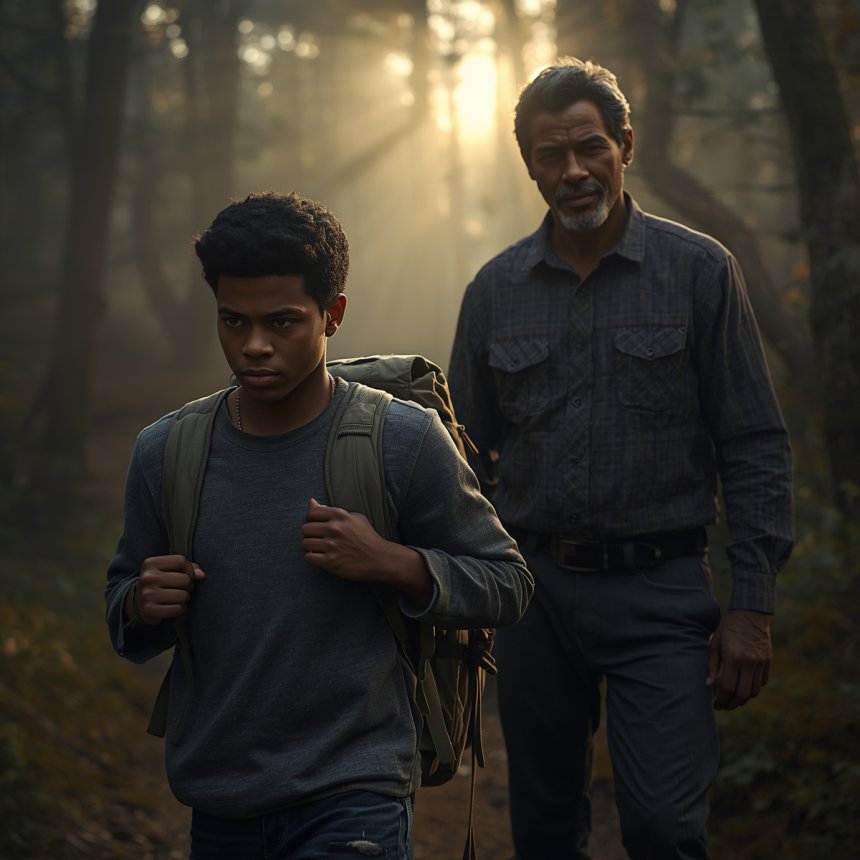
· The "Get Home" Standard: Can he walk 10 miles with a loaded backpack in all weather? This is a non-negotiable baseline. Make it a rite-of-passage hike you do together.
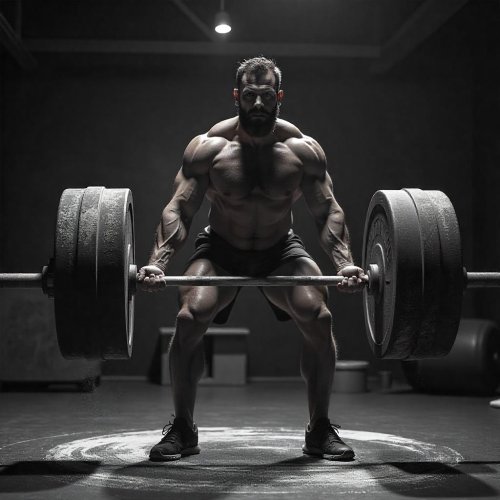
· The "Save a Life" Standard: Can he carry or drag 180 lbs (the average adult male) 50 yards to safety? This requires raw, functional strength. Focus on deadlifts, squats, and farmer's carries.
· The "Escape" Standard: Can he sprint 100 yards at maximum effort, climb an 8-foot wall, and swim 50 meters in his clothes? These are not extreme asks; they are basic physical competencies.
2. Unarmed Combat: The Language of Violence
You are not teaching him to "fight." You are teaching him to stop a fight, immediately and decisively, so he can get home safely.
· Brutal Reality: Most street fights end up on the ground. He must know the basics of grappling. Brazilian Jiu-Jitsu is not a sport here; it's a lifesaving skill to create space to get back on his feet.
· Striking: Basic boxing (punches, footwork) and Krav Maga principles (eye strikes, groin strikes, throat strikes) are for absolute, life-or-death scenarios. The goal is to create a shockwave of pain and disorientation to facilitate his escape.
· The Mindset: The best fight is the one you avoid. But if it's unavoidable, his response must be explosive, overwhelming, and without a single ounce of hesitation. He must be the first, most violent person in that conflict.
3. First Aid: It's Not a Band-Aid, It's a Battlefield Triage
A Red Cross CPR class is a start. It is not enough.
· The "Oh Sh*t" Kit: He must own and know how to use a real Individual First Aid Kit (IFAK). This includes:
· Tourniquets (CAT Gen 7): He must be able to apply one to his own arm or leg, with one hand, in the dark. Practice this. A poorly applied tourniquet is a death sentence.
· Hemostatic Gauze (QuickClot/Celox): For packing a deep, sucking chest wound or a gushing leg wound.
· Chest Seals: For a punctured lung.
· Drill This: "I'm bleeding from the femoral artery. Show me what you do." Watch him. Time him. His ability to stop catastrophic bleeding in himself or a friend is the single most important medical skill he will ever possess.
Pillar III: The Hostile Environment (Thriving When the Systems Fail)
When the power grid fails, the water stops, or he's simply lost in the woods, his relationship with the environment changes from consumer to participant.
1. The Rule of 3: A Survivor's Priority Matrix
Engrave this in his mind. He can survive:
· 3 Minutes without air.
· 3 Hours without shelter (in a harsh environment).
· 3 Days without water.
· 3 Weeks without food.
Notice how "food" is last. Most preppers get this backwards.
2. Shelter & Fire: Creating Life in Chaos
· Shelter: It's not just a tent. Can he identify a natural shelter? Can he improvise a debris hut that will keep him dry and warm with only a survival blanket and paracord? This is a hands-on, weekend camping skill.
· Fire: Mastery of fire is mastery of morale, warmth, water purification, and signaling.
· Tier 1: Bic Lighter. Always have two.
· Tier 2: Ferro Rod. Dependable in wind and rain. He should be able to get a fire going with one in under 60 seconds.
· Tier 3: Friction Fire (Bow Drill). This is not about practicality; it's about the ultimate confidence boost. The boy who can create fire from sticks knows, in his soul, that he is a creator, not a victim.
3. Water & Food: The Procurement Equation
· Water: He must know how to find it (transpiration bags, morning dew collection), and, most critically, how to purify it. Boiling is primary. Chemical treatment (iodine/chlorine dioxide tablets) is a backup. A quality life straw or Grayl geopress is a modern godsend for his "Get Home Bag."
· Food: This is less critical but still vital for morale. Teach him the Universal Edibility Test—a step-by-step process to safely test an unknown plant. Teach him basic trapping (snares) and fishing. This shifts his mindset from "I hope I find food" to "I know how to acquire food."
4. Navigation: The Lost-Proof Skill
In a world of GPS, this is a dying art. It is a superpower.
· Map & Compass: He must be able to orient a topographic map, take a bearing, and navigate cross-country to a point at least one mile away. Do this with him. Get lost on purpose (safely) and find your way back.
· Natural Navigation: Teach him how to use the sun, the stars (find Polaris), and even the growth patterns of moss on trees (a less reliable but good-to-know secondary sign) to find his bearings.
Pillar IV: The Tribe (Social Survival and Leadership)
Humans are tribal. His survival, and his quality of life, will depend on his ability to navigate, lead, and contribute to the tribe.
1. Communication: The Art of De-escalation and Command
90% of potential physical conflicts can be ended with the right words and tone.
· Verbal Judo: Teach him to use professional, non-confrontational language to defuse a situation. "I understand you're upset, sir. I'm trying to help." Practice this.
· The Command Voice: Conversely, there are times for a short, sharp, guttural command that brooks no argument. "STOP!" "BACK UP!" This voice must be practiced until it comes from the diaphragm, not the throat. It is a tool that can freeze an aggressor in their tracks.
2. Bureaucratic & Financial Survival
The modern world has its own predators. They wear suits and use fine print.
· Understand a Contract: Go over a cell phone contract or a car lease with him. Highlight the termination clauses, the fees, the obligations. Teach him to never, ever sign something he doesn't fully understand.
· Basic Auto Repair: He should be able to change a tire, jump-start a car, check and change his oil, and replace basic fuses. This isn't just saving money; it's preventing him from being a vulnerable, stranded victim on the side of a dark road.
· The "F.U. Fund": Teach him to always have enough cash saved to cover 3 months of expenses. This is his financial escape pod from a dead-end job, a toxic living situation, or any other life trap. It grants him the ultimate freedom: the power to say "no."
The Phased Implementation Plan: A Father's Blueprint
This isn't a checklist for a single weekend. It's an 18-year curriculum.
· Ages 5-10 (The Apprentice): Focus on fun. "Condition Yellow" as a game. Basic first aid (cleaning a wound, applying a bandage). Building simple shelters in the backyard. Short, rewarding hikes. The goal is familiarity, not fear.
· Ages 11-14 (The Journeyman): Introduce responsibility. He graduates to a real knife under supervision (teach the "blood circle"). He learns and practices the ferro rod. He carries a small first-aid kit on hikes and is responsible for it. Start the foundational fitness. Begin the serious talks about money, contracts, and social awareness.
· Ages 15-18 (The Master-in-Training): This is the final forge. He gets his "Get Home Bag" and is responsible for its contents. He learns and drills with the tourniquet. He takes a combat sport. He navigates a cross-country course alone. He does the "Get Home" hike. He has a job and starts building his "F.U. Fund." You are no longer a instructor, but a mentor and a peer.
Top 5 Questions People Ask
Question 1: What are the most important survival skills to teach a teenager first?
Answer: Prioritize the "Rule of 3" for modern survival. Before anything else, focus on
1. Mental Fortitude (Shelter from Panic): Teach the OODA Loop (Observe, Orient, Decide, Act) and situational awareness drills. A calm mind is the first priority.
2. Bleeding Control: A severe bleed can kill in 3 minutes. Ensure he can self-apply a tourniquet. This is non-negotiable.
3. Urban Navigation & The "Get Home" Principle: Can he navigate home from an unfamiliar part of town without a phone? These three skills address the most immediate and likely threats.
Question 2: How can I teach my son to be more aware of his surroundings and not oblivious?
Answer: Make it a game, then a habit. Start with the "Color Code of Awareness." Explain that "Condition Yellow" (relaxed alert) is his new baseline.
When you're in public, casually quiz him: "Point to the two nearest exits." "Describe the man who just walked past us." "What's the license plate of the car in front of us?" Reward him for noticing details you missed. This transforms him from a passive zombie into an active observer of his environment, which is the foundation of personal safety.
Question 3: What should I put in a 'Get Home Bag' for my 16-year-old son?
Answer: Keep it simple, lightweight, and legal. The goal is to get him home, not to survive the apocalypse. Essentials include:
1. Water & Purification: A reusable water bottle and a LifeStraw.
2. Navigation: A physical map of your local area and a compass he knows how to use.
3. Shelter & Warmth: A compact emergency bivvy (space blanket sack), a poncho, and a lighter.
4. Light: A high-lumen flashlight or headlamp.
5. Safety: A basic IFAK with a tourniquet and hemostatic gauze, and a power bank for his phone. The most important thing is that he has it with him and knows the purpose of every item.
Question 4: How do I teach my son to be resilient and not give up when things get hard?
Answer: You must deliberately inoculate him against stress. Resilience is a muscle built through controlled exposure to discomfort. Implement the "Cold Plunge Principle"—whether it's a literal cold shower each morning or completing a difficult, tedious chore without complaint.
During physical training, add cognitive load: have him solve math problems or recite a poem after he's exhausted from a run. This wires his brain to think clearly under pressure, teaching him that the feeling of "suck" is temporary and manageable.
Question 5: At what age should I start teaching my son serious skills like using a tourniquet?
Answer: This follows a phased "Apprentice, Journeyman, Master" model. Ages 5-10
(Apprentice): Focus on fun and familiarity with first aid (band-aids, cleaning wounds). Ages 11-14 (Journeyman): Introduce a real knife under strict supervision and teach fire starting with a ferro rod. Ages 15-18
(Master-in-Training): This is the time for serious skills. He has the maturity and physical strength to learn and drill with a tourniquet, understand the gravity of its use, and retain the muscle memory. The key is to build a foundation of responsibility over time, culminating in these life-saving skills.
FAQ Section (Addressing Common Doubts)
FAQ 1: Isn't this going to make my son paranoid or anxious?
Answer: Absolutely not. This is the core misunderstanding. We are not teaching paranoia; we are teaching competence. Paranoia is a feeling of helpless fear. What we instill is confident awareness. A boy who knows he can stop bleeding, start a fire, or navigate home is not anxious; he is empowered. The drills and knowledge replace the fear of the unknown with a concrete plan of action, which is the ultimate antidote to anxiety.
FAQ 2: I'm not a survival expert myself. How can I teach what I don't know?
Answer: You don't need to be the expert; you need to be the leader. The journey is the point. Learn with him. Watch the tourniquet videos together and practice on each other. Go on that first navigation exercise and get "lost" as a team. Your vulnerability in learning alongside him is more powerful than pretending to know everything. It models lifelong learning, humility, and shows him that capable men are made, not born. Your role is to curate the knowledge and create the challenging experiences.
FAQ 3: This seems so extreme. We live in a safe suburb. Is this really necessary?
Answer: The skills are for the unexpected, not the expected. You have a fire extinguisher in your safe suburban kitchen, not because you expect a fire, but because the consequence of being without one is catastrophic. These skills are the human equivalent of that fire extinguisher. A car accident, a natural disaster, a sudden civil disruption, or even just getting lost on a road trip—these don't only happen in "unsafe" places. Preparedness is not a reflection of your environment's safety, but a measure of your personal responsibility.
The Final, Brutal Truth
The world is not becoming safer. It is becoming more complex and, in some ways, more fragile. Your son will face challenges you never conceived of.
This journey is not just about him. It is about you. It is the sacred responsibility of a father to be the first, and most important, hard test his son ever faces. You are the anvil upon which his character is hammered. You are the safe container for his failures before the world penalizes him for them.
Do not outsource this. Do not assume his school, the internet, or his friends will teach him. This is your legacy. It will be uncomfortable. It will be demanding. There will be days he resents you for it.
But on the day he looks into the abyss—whether it's a personal crisis, a physical threat, or a moment of profound uncertainty—and doesn't flinch, you will know. You will know you didn't just raise a boy; you forged a man who can not only survive this world, but command respect from it.
Now stop reading. Go. His 18th birthday is coming faster than you think.
Share
What's Your Reaction?
 Like
0
Like
0
 Dislike
0
Dislike
0
 Love
0
Love
0
 Funny
0
Funny
0
 Angry
0
Angry
0
 Sad
0
Sad
0
 Wow
0
Wow
0