
The Difference Between Being Kind and Being Weak
Stop confusing kindness with weakness. Learn the brutal difference between being genuinely kind and being a coward—and how strong boundaries earn real respect.

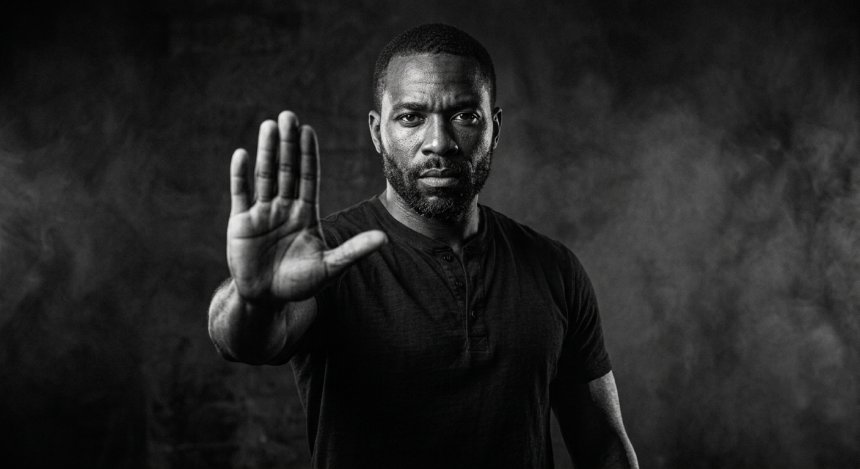
The Brutal Difference Between Being Kind and Being Weak
Most men aren't kind. They're cowards wearing kindness as camouflage.
And deep down, you know it.
You know the difference between holding a door open for an old man and letting your boss walk all over you because you're afraid of conflict. You know the difference between helping a friend move and loaning money to a guy who's never paid you back because you can't stomach the awkwardness of saying no.
One is strength. The other is fear dressed up in a smile.
If you've ever felt that quiet, gnawing resentment after saying "yes" when you meant "no" — this article is for you.
If you've ever watched another man take advantage of your generosity and felt rage in your chest but said nothing — keep reading.
Because we're about to gut the lie that's keeping you soft, small, and silently miserable.
My Scar Tissue: The $25,000 Lesson in False Kindness
Before I built anything worth a damn, I had to learn this lesson the hard way.
Years ago, I ran a small business. A "friend" came to me with a sob story. His rent was due. His car was getting repossessed. His kid needed school supplies. I "helped" him. Then I helped again. Then I hired him.
He stole from me. Not in some dramatic, movie-style heist. Slowly. Casually. A few hundred here. A fake invoice there. By the time I caught on, I was out $25,000.
Here's the part that still makes my jaw tight: I knew.
I knew after the first loan he wasn't good for it. I knew when he showed up late every day. I knew when the numbers didn't add up. But I didn't want to seem harsh. I didn't want to be "that guy." I didn't want to create conflict.
So I swallowed it. I smiled. I told myself I was being a good person.
I wasn't being kind. I was being a coward.
That $25,000 wasn't a loan. It was tuition at the school of hard truths. And the first lesson was this:
Weakness is a parasite that feeds on your fear of being disliked.
The second lesson? Kindness requires courage. Weakness requires none.
DON'T MISS THIS: The Death of the "Nice Guy": Why Your Agreeability Is Killing Your Respect
Defining the Battlefield: What Kindness Actually Is
Let's clear the fog before we go further.
Kindness is a choice made from strength.
It's the deliberate decision to extend grace, help, or patience to someone when you have the power to do otherwise. You could demand repayment. You could hold a grudge. You could assert dominance. But you choose compassion because it aligns with your values — not because you're afraid of the alternative.
Weakness is submission disguised as virtue.
It's the inability to set boundaries. The terror of disappointing people. The reflex to apologize for existing. The habit of absorbing disrespect because standing up feels too expensive.
Here's the distinction in one sentence:
A kind man gives because he wants to. A weak man gives because he can't say no.
Got it? Good. Now let's dig into the mechanics.
Why Men Confuse the Two: The Cultural Gaslighting
Society has been selling you a defective definition of manhood for decades.
You've been told to "be nice." To avoid conflict. To prioritize everyone's comfort over your own boundaries. To "check your privilege." To apologize for your strength. To soften your edges so you don't intimidate anyone.
Here's what they didn't tell you:
Niceness is not kindness.
Niceness is performance. It's the social lubricant that keeps things smooth. It's saying "no problem" when you're burning inside. It's laughing at jokes that insult you. It's texting back "all good" when it's not good at all.
Niceness is a mask. Kindness is a virtue. And weakness is what happens when the mask fuses to your face.
Studies in organizational psychology have shown a phenomenon called "toxic niceness" — where employees suppress legitimate concerns and dissatisfaction to maintain a false sense of harmony. The result? Higher turnover, lower engagement, and skyrocketing resentment.
Sound familiar?
You can't build a life on suppressed resentment. It leaks. It poisons. It eventually explodes.
And the explosion usually targets the wrong people — your wife, your kids, yourself.
The Stoic Litmus Test: What Marcus Aurelius Would Slap You For
The Stoics understood something modern men have forgotten:
Virtue without strength is just aspiration.
Marcus Aurelius — the most powerful man in the world at the time, emperor of Rome — wrote in his Meditations:
"Waste no more time arguing about what a good man should be. Be one."
Notice he didn't say "be nice." He said be good.
Being good requires discernment. It requires the wisdom to know when to give and when to withhold. It requires the courage to say the hard thing. It requires the discipline to act consistently, not react impulsively.
Seneca, another heavyweight of Stoic philosophy, said:
"He who indulges everyone is as bad as he who indulges no one."
Read that again.
Indiscriminate "kindness" is not virtue. It's cowardice with a moral excuse.
The man who lets everyone walk on him isn't a saint. He's a doormat. And doormats don't get to heaven — they just get stepped on.
Epictetus, the philosopher born a slave, had this to say:
"If you want to improve, be content to be thought foolish and stupid."
Translation: Stop performing for approval.
Stop being the "nice guy" because you're terrified of being the "bad guy." Be willing to be misunderstood. Be willing to disappoint. Be willing to be disliked — because true kindness often requires exactly that.
DON'T MISS THIS: The Psychology of the "Covert Contract": Why You Expect Sex for Being Polite
The Neuroscience of Your "Yes" Reflex: Dopamine, Fear, and the People-Pleaser's Prison
Why do you say yes when you mean no?
It's not because you're a good person. It's because your brain is wired for survival, and it's hijacked your virtue.
Dopamine — the neurotransmitter of anticipation and reward — fires when you anticipate approval. When you imagine the smile on someone's face after you agree to help, your brain releases a little hit of feel-good chemicals.
You're not being generous. You're being an addict.
You're chasing the next hit of "he's such a good guy." And like any addict, you'll sacrifice your time, energy, money, and self-respect to get it.
Meanwhile, the amygdala — your brain's fear center — lights up when you consider saying no. What if they're angry? What if they think less of you? What if this relationship ends?
So you cave. You say yes. You feel the temporary relief of avoiding danger.
And then the resentment creeps in.
Psychologists call this "the resentment loop" — a cycle of overcommitment, silent anger, passive-aggressive behavior, and eventual blowup.
Here's the brutal truth: your "kindness" is often just a fear response dressed in moral clothing.
A 2023 study published in the Journal of Personality and Social Psychology found that people-pleasing behavior is strongly correlated with higher levels of cortisol (the stress hormone) and lower levels of subjective well-being.
Being weak is literally bad for your health.
The Alpha Paradox: Why True Kindness Requires Ruthless Strength
Here's where most "alpha male" content gets it dead wrong.
They'll tell you kindness is weakness. That real men take what they want. That empathy is for the soft and the broken.
Nonsense.
The most dangerous men in history were often the most controlled. The most disciplined warriors were often the most compassionate fathers. The strongest leaders were often the most humble.
Strength and kindness are not opposites. They're complements.
Think about it:
· The lion doesn't need to roar to prove it's a lion.
· The Navy SEAL doesn't need to tell you he can kill you.
· The genuinely strong man doesn't need to assert dominance over everyone in the room.
Insecurity performs. Strength is quiet.
Here's the paradox: You cannot be truly kind until you're capable of being truly dangerous.
If you lack the ability to say no, to set boundaries, to walk away, to enforce consequences — then your "kindness" is just submission.
But when you can hurt someone, can walk away, can demand respect — and you choose patience instead? That's kindness. That's virtue. That's strength.
Jordan Peterson put it this way:
"A harmless man is not a good man. A good man is a very dangerous man who has that under voluntary control."
So stop trying to be harmless. Stop shrinking. Stop apologizing for your capacity for aggression.
Build the capacity. Control the trigger.
Then your kindness means something.
The Practical Battlefield: 7 Scenarios Where You're Probably Being Weak (And What to Do Instead)
Enough theory. Let's get tactical.
1. The Friend Who "Needs" Money (Again)
You've loaned him $500. He's paid back $0. He's asking for more.
Weak Response: "Yeah, man, no problem. I'll Venmo you tonight." (Then you seethe silently while he posts pictures from the bar.)
Kind Response: "I've helped you before, and you haven't paid me back. I'm not comfortable loaning more money. I care about you, but this is where I have to say no."
Is that harsh? Maybe. But what's harsher — telling the truth or enabling a grown man's irresponsibility?
Boundaries are kindness.
2. The Boss Who Exploits You
He emails at 10pm. He "asks" you to cover weekends. He takes credit for your work.
Weak Response: "No problem at all! Happy to help!" (Then you complain to your wife about how burned out you are.)
Kind Response: "I'm happy to contribute, but I need to set some boundaries around my personal time. Can we discuss workload expectations this week?"
You're not being difficult. You're being professional. And you're protecting the man your family needs you to be.
3. The Woman Who Tests You
She cancels plans last minute. She's hot and cold. She "doesn't know what she wants."
Weak Response: "That's okay! I'll be here whenever you figure it out."
Kind Response: "I like you, but I'm not interested in being an option. If you want to see me, I'm available. If not, I wish you the best."
Walking away isn't cruel. It's self-respect.
And women respect it more than you'll ever know.
4. The Family Member Who Crosses the Line
They criticize your wife. They undermine your parenting. They "joke" about your career.
Weak Response: Laugh it off. Change the subject. Pretend it doesn't bother you.
Kind Response: "I love you, but that's not something I'm going to tolerate. If you want to be part of this family, you'll show respect."
Defending your home is an act of love.
5. The Stranger Who's Rude in Public
He cuts you in line. He makes a snide comment. He flexes his attitude like a badge of honor.
Weak Response: Look down. Say nothing. "Not worth it."
Kind Response: Calmly, firmly: "Hey, I was here first." Or simply: "Watch your mouth."
You don't need to throw punches. But you do need to stand up straight, make eye contact, and communicate that you won't be disrespected.
Presence deters predators.
6. The "Friend" Who Mocks Your Goals
You tell him you're starting a business. Getting in shape. Writing a book.
He laughs. "That's cute. Good luck with that."
Weak Response: Laugh along. Downplay your ambition. "Yeah, probably won't work anyway."
Kind Response: "I'm serious about this. If you can't support me, that's fine. But I don't need the negativity."
Then — and this is the key — go do the work.
7. Yourself (The Hardest One)
You promised yourself you'd wake up early. You didn't. You promised you'd stop drinking on weeknights. You didn't. You promised you'd stop scrolling at 2am. You didn't.
Weak Response: "I'll start tomorrow." (The most dangerous four words a man can say.)
Kind Response: "That was unacceptable. I'm better than this. Today, I prove it."
Self-kindness is discipline. Not indulgence, not excuses, not "self-care Sundays" where you eat garbage and watch Netflix. Discipline.
DON'T MISS THIS: How to Say "No" Without Explaining Yourself: A Script for Men
The Data: What Research Says About Boundaries and Respect
Don't take my word for it. The evidence is everywhere.
A landmark study from the University of Amsterdam found that people who struggle to say no experience higher rates of burnout, depression, and anxiety.
Research from the Gottman Institute (the gold standard for relationship research) shows that couples who maintain healthy boundaries report higher levels of intimacy and satisfaction.
Dr. Henry Cloud and Dr. John Townsend's book Boundaries has sold over 4 million copies — because millions of people are starving for permission to say no.
The data is clear:
Boundaries create respect. Respect creates trust. Trust creates intimacy.
And the absence of boundaries? It creates resentment. And resentment is the slow poison that kills every relationship it touches.
The "Nice Guy" Epidemic: A Pain Point Competitors Ignore
Most articles about kindness versus weakness target a general audience. They'll give you feel-good platitudes like "just be yourself" and "real strength is being gentle."
They're missing the point.
The real pain point for men isn't confusion about the definition of kindness. It's the shame of having been weak.
It's the memory of the time you let your friend down because you were afraid to say no. It's the relationship you stayed in too long because you didn't want to hurt her feelings. It's the job you tolerated because you were scared to leave.
That shame is what's keeping you stuck.
And the only way through it is to confront the truth:
You weren't being kind. You were being afraid.
You weren't being the good guy. You were being the safe guy.
And the safe guy never builds anything worth remembering.
The Hormesis Principle: Why Discomfort Builds Strength
There's a concept in biology called hormesis — the idea that small doses of stress make an organism stronger.
Lifting weights creates micro-tears in muscle fibers. The body repairs them stronger than before.
Cold exposure shocks the system. The body adapts by improving circulation and metabolic efficiency.
Intermittent fasting stresses the digestive system. The body responds by increasing cellular repair (autophagy).
The same principle applies to your character.
Every time you say no when it's uncomfortable, you build your boundary muscle.
Every time you have a hard conversation instead of avoiding it, you increase your relational strength.
Every time you disappoint someone who needed to be disappointed, you exercise your integrity.
Comfort is the enemy of growth.
And here's the beautiful part: the more you do it, the easier it gets. The first boundary is excruciating. The tenth is uncomfortable. The hundredth is automatic.
You're not born with a spine. You build it.
What Real Kindness Looks Like: A Framework
So what does actual, strength-based kindness look like in practice?
Here's a four-part framework I've developed over years of trial and error:
1. Kindness Requires Choice (Not Reflex)
If you can't say no, your yes is meaningless.
Real kindness is volitional. It's a conscious decision, not a programmed response. The man who can walk away but chooses to stay — that's commitment. The man who can demand repayment but chooses to forgive — that's grace.
Remove the choice, and you remove the virtue.
2. Kindness Considers Long-Term Good (Not Short-Term Comfort)
Sometimes the kindest thing you can do is let someone fail.
Let your friend file bankruptcy instead of bailing him out (again). Let your brother face the consequences of his drinking instead of covering for him. Let your employee get fired instead of doing his work.
Enabling is not love. It's theft.
You're stealing their opportunity to grow.
3. Kindness Speaks the Truth (Even When It Hurts)
"Bro, I love you, but you're making a mistake."
"I know this isn't what you want to hear, but you're the problem."
"Your behavior is unacceptable, and if it continues, I'm done."
Honesty is kindness. Flattery is manipulation.
4. Kindness Is Selective (Not Indiscriminate)
You have a finite amount of time, energy, and emotional bandwidth.
Spending it on people who don't respect it is foolishness, not virtue.
Invest your kindness where it matters: your family, your brothers, your community. Not in every stranger with a sob story.
Prioritizing isn't selfishness. It's stewardship.
The Military Parallel: Why the Best Leaders Are Both Fierce and Fair
Look at the great military leaders throughout history. They share a common trait:
They were loved by their men AND feared by their enemies.
· George Washington — dignified, disciplined, and absolutely ruthless when necessary.
· Erwin Rommel — respected by both sides for his tactical brilliance and his treatment of prisoners.
· Chesty Puller — the most decorated Marine in U.S. history, famous for leading from the front and demanding excellence.
These men weren't soft. They weren't pushovers. They weren't "nice."
But they were good.
They cared for their people. They set high standards. They enforced consequences. They led by example.
That's what real masculine kindness looks like.
It's not about being gentle. It's about being just.
It's not about avoiding conflict. It's about entering conflict when necessary to protect what matters.
It's not about making everyone comfortable. It's about making everyone better.
The Action Plan: 5 Brutal Steps to Reclaim Your Strength (Starting Today)
Knowledge without action is just entertainment. You've read this far — now do something with it.
Here's your assignment:
Step 1: Identify Your Weakest Boundary
Today, write down the one area where you consistently cave.
Is it money? Time? Emotional labor? Physical boundaries?
Be specific. "I let my coworker dump his work on me" is better than "I'm bad at boundaries."
Step 2: Rehearse the "No"
Literally practice saying it out loud.
"No, I'm not available."
"No, that doesn't work for me."
"No, I won't be able to help with that."
Do it in the car. In the shower. In front of the mirror.
Preparation destroys fear.
Step 3: Have the Conversation You've Been Avoiding
Pick the one person you've been allowing to cross your boundaries.
Maybe it's a friend who's overstayed his welcome. Maybe it's a boss who's exploiting you. Maybe it's a partner who's testing you.
Within the next 48 hours, have the conversation.
Say the hard thing. Set the boundary. Accept the discomfort.
Step 4: Do Something Uncomfortable (Today)
Growth lives on the other side of discomfort.
· Take the cold shower.
· Do the extra set.
· Make the call you've been avoiding.
· Cancel the commitment you shouldn't have made.
· Have the awkward conversation.
One act of courage begets another.
Step 5: Audit Your Circle
Look at the people around you.
Who respects your boundaries? Who pushes against them?
Who celebrates your growth? Who mocks your discipline?
Weak men keep weak company.
If you're serious about this, you may need to create some distance from people who benefit from your weakness.
That's not cruel. That's survival.
Final Words: Be Dangerous, Then Be Kind
Here's what I want you to remember:
You were not born to be a doormat.
You were not put on this earth to absorb everyone else's problems while your own life crumbles.
You were not designed to smile while your boundaries are stomped on.
You were built for more.
Built to protect. To provide. To lead. To love with strength and discipline.
And the path to that life runs through the discomfort of saying no, having hard conversations, and letting people be upset with you.
Courage first. Kindness second.
Because only a man with the capacity for violence can truly choose peace.
Only a man with options can truly choose commitment.
Only a man with strength can truly choose gentleness.
Build the strength.
Then let your kindness flow from it.
And watch what happens.
If this hit home, share it with a man who needs to hear it. And if you're ready to do the work, start with Step 1 tonight.
No excuses. No delays. No more weakness disguised as virtue.
It's time to become the man you were meant to be.
Share
What's Your Reaction?
 Like
0
Like
0
 Dislike
0
Dislike
0
 Love
0
Love
0
 Funny
0
Funny
0
 Angry
0
Angry
0
 Sad
0
Sad
0
 Wow
0
Wow
0